Showing posts with label jeremy shamos. Show all posts

Sunday, February 14, 2016

A First Rate Revival of a First Rate Farce

Review: Noises Off

After seeing Noises Off, you'll never look at a plate of sardines the same way.

When is bad acting the best kind of acting? When it is intentional and pulled off with the kind of deft, reckless comic abandoned used by every single cast member in Roundabout Theatre's stellar revival of Michael Frayn's farcical masterpiece, Noises Off. The belly laughs come early and often in this dizzying comic tour de force, which marks not just the first Broadway show of 2016 but also the first great one.

Heralded since its 1983 premiere as one of the all time great theatrical comedies, Noises Off milks its many laughs out of an exceedingly simple premise. A troupe of actors is desperately trying to mount a production of the fictional sex farce Nothing On, a terrible play being done terribly by the ill-equipped actors. Noises Off is broken up into three acts, each set at a different point in the show's run: Act I details the show's disastrous technical rehearsal, Act II moves the action backstage during a performance midway through the show's run, and Act III comes back in front of the curtain to show just how much the show has fallen apart by the end of its run. All of this is enacted by a wonderfully eccentric cast of characters who are concurrently sorting out multiple backstage romances, none of which seem to be going particularly well.

It must be said that even 30 years later Frayn's writing remains a marvel of economy and subtle exposition. As Noises Off primarily deals with how poorly the play-within-a-play is going, there's little time for fleshing out the actors performing it, and yet Frayn manages to pepper the dialogue with enough organic references to their offstage lives that everyone comes across as a person rather than a caricature. The show's first act is funny enough on its own that you don't realize how much expository groundwork it's laying. The repetition of scenes from Nothing On (necessitated by multiple missed cues during the play's tech rehearsal) allows you to follow what's happening in Acts II and III, where the same portion of the fictional comedy is viewed from backstage and from the audience during completely botched performances, yet you don't even realize that's what Frayn's doing until long after the final curtain has literally fallen. The only real knock against the writing is that the playwright fails to follow up on the bombshell revelation at the end of Act II, but at the same time the fact Frayn leaves certain details offstage details to the imagination is part of the appeal.

Of course no matter how strong a script is, you still need a cast and creative team capable of executing it, and that is where this revival truly shines. As the saying goes, "Dying is easy; comedy is hard," and nowhere is that more apparent than in the carefully plotted madness of Noises Off. The play relies on everything going wrong in such a specific fashion that one misstep would derail the entire enterprise, and yet for it to remain funny you cannot see the work or be aware you're being set up for a punchline. Director Jeremy Herrin nails this aspect, carefully crafting each moment of stage time so you can follow both the plot of the play-within-a-play and the behind the scenes shenanigans with ease. He keeps the pacing tight and the comedy heightened yet real; none of the characters have any idea they're being funny, which makes their hapless misadventures all the more hilarious.

Herrin has also assembled one of the hardest working casts in the industry, a true ensemble where every member is working together towards the larger goal. Part of what makes the sparsity of character development work is this cast's ability to fill in the blanks with their mannerisms, and at any moment you can watch anyone onstage and see a fully committed and often deeply hilarious performance. The specificity of the character choices is astounding, as is the varied and delightful ways they interact with one another. It helps that everyone has impeccable comic timing and a major affinity for physical comedy, from prat falls to slap fights to a tumble down the stairs executed with near balletic grace. The actors' physicality comes to a head during the showstopping backstage pantomime that makes up the majority of Act II, a sequence so packed with comic genius it could be watched half a dozen times and reveal entirely new layers of brilliance each time.

Andrea Martin is excellent as the company's resident (and fading) diva, who slowly but surely comes to realize she's in way over her head. Famed comedienne Martin is essentially playing the straight woman, which anyone who works in comedy will tell you is the hardest role to make work, a change of pace she expertly handles while remaining her unimpeachably hilarious self. Jeremy Shamos is side-splittingly funny as an actor who can't stand the sight of violence and just wants to know his motivation, getting funnier and funnier as his character becomes more and more bedraggled. Kate Jennings Grant is immensely appealing as the company's most competent actor and resident gossip monger, and has perhaps the play's single greatest bit of physical comedy as she *slowly* slinks across the floor midperformance to "unobtrusively" remove an errant plate of sardines from the set. Campbell Scott is delightfully explosive as the cantankerous director trying to corral this hapless troupe of actors, and both Tracee Chimo and Rob McClure provide fine support as the production's stage manager and resident technician/understudy, respectively. David Furr kills as the fading marquee idol seemingly incapable of finishing his sentences, and as the resident drunk Daniel Davis is great fun.

But the true standout of the show (quite the accomplishment in a cast this talented) is Megan Hilty as the blonde bombshell who spends the majority of the play in sexy lingerie. Hilty is one of the best bad actresses you are likely to ever see, and her every second of stage time is a multi-faceted masterclass in comic business. Hilty never upstages her cohorts, but when it's her time to shine she takes the moment and runs with it, like her tear-inducingly awkward crawl down the staircase while searching for her missing contact. Whether she's practicing her meditation, silently mouthing the other actors' lines, or flailing her arms in mock panic, Hilty is a comedic knockout.

Really, the only thing wrong with Noises Off is that it's a limited run production, meaning we only have another month to savor this sublime production. The entire hilarious cast will soon have to clear out of the American Airlines Theatre to make way for a very different type of classic (Roundabout's upcoming revival of Long Day's Journey Into Night), so I beg you to brave the cold and catch this production while you can. It's the perfect antidote to the winter doldrums, and proof positive that comedy can be every bit as artistically rewarding as drama.

Saturday, June 2, 2012

2012 Tony Predictions: Best Featured Actor


The Tony Awards are getting closer every minute, and if I want to finish these prediction articles before next weekend I don’t have time for clever intros!  As you read on, please remember my two caveats:  1) I have not seen all of the nominated shows; and 2) I am predicting who will win, which may be different from who should win (a distinction that will be further discussed in the body of the article).
Moving right along, here come the supporting men.

Best Featured Actor in a Play


Nominees:  Christian Borle, Peter and the Starcatcher; Michael Cumpsty, End of the Rainbow; Tom Edden, One Man, Two Guvnors; Andrew Garfield, Death of a Salesman; Jeremy Shamos, Clybourne Park


I’m not sure how Michael Cumpsty managed to pull himself out from under the massive shadow cast by Tracie Bennett in End of the Rainbow, but good on him for securing one of the five Best Featured Actor nominations.  I hope he is proud of his accomplishment, because a nomination is where his Tony journey ends.  I suspect the same is true for Tom Edden in One Man, Two Guvnors.  While the British import received a host of nominations, I just don’t think it has enough industry buzz to actually win any of the big awards, especially with such strong competition among this season’s plays.

Jeremy Shamos plays two miserable human beings in Clybourne Park, and the fact that he can make you understand where they’re coming from is a testament to both his performance and Bruce Norris’ writing.  But the lack of nominations for his costars seems to indicate Tony voters are more impressed with the work as a whole then the individual performances, even though all are stellar.  Shamos is a long shot for the Featured Actor trophy, but he does have a shot, which is more than I’ll say for both Cumpsty and Edden.

I think this race boils down to Christian Borle versus Andrew Garfield, which raises the eternal acting debate of comedy versus drama.  Which is more difficult, and therefore more worthy of praise when executed successfully?  Tony voters have shown a proven bias toward both serious drama and Hollywood stars making strong Broadway debuts.  In Death of a Salesman, Garfield holds his own against some established stage veterans while bringing new life and immediacy to a well-known Arthur Miller role.  This same trick won Scarlett Johansson a Tony two years back, and I think Garfield has a good chance of repeating her success. 

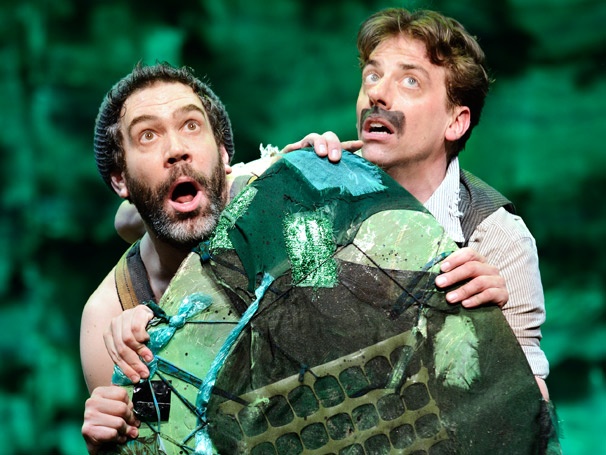
Borle, on the other hand, has been handed a gem of a role as Peter and the Starcatcher’s scenery chewing villain Black Stache.  After years of solid performances, Stache seems to be Borle’s breakout role, and his work on NBC’s Smash has raised his profile to the point where Tony voters can pretend that in picking him, they are honoring one of the Hollywood stars they love so much.  Borle is also the well-liked Starcatcher’s best shot at an actual win, and I think we’ll be hearing him gush about what a fantastic year he’s had when they call him up to the podium on Tony night.  Poor Mr. Garfield will just have to count his upcoming Amazing Spider-Man royalties in consolation.


Will Win:  Christian Borle, Peter and the Starcatcher
Should Win:  Andrew Garfield, Death of a Salesman (not because Borle is bad, but because in this case I genuinely believe what Garfield accomplished was harder)


Best Featured Actor in a Musical


Nominees:  Phillip Boykin, Porgy and Bess; Michael Cerveris, Evita; David Alan Grier, Porgy and Bess; Michael McGarth, Nice Work If You Can Get It; Josh Young, Jesus Christ Superstar


I was distinctly unimpressed with David Alan Grier’s performance when I saw Porgy and Bess back in January.  The actor didn’t seem to have a proper handle on his character, and the Sportin’ Life who sang “There’s a Boat That’s Leaving Soon” was vastly different than the one who proclaimed “It Ain’t Necessarily So.”  Revisiting the show last month, I’m happy to report that Grier has smoothed out a lot of inconsistencies in his characterization, but I still doubt most voters would consider the performance Tony-worthy. 

Michael Cerveris is probably the best thing about the current Evita revival, at least from an acting standpoint.  Unfortunately, the role of Juan Peron is even more underwritten than most Andrew Lloyd Webber roles, and even an actor Cerveris’ caliber can’t quite hide the fact that he’s working with pretty poor material.  Similarly, Michael McGarth deserves a better show than the misguided Nice Work.  Despite being the most reliably funny aspect of the show, I suspect a general indifference towards Nice Work will keep McGarth out of serious contention.

Phillip Boykin deserves to win this award, as his supremely menacing Crown is the sort of operatic presence Porgy and Bess demands even in this revised musical version.  Boykin is the only cast member who can hold his own vocally against Audra McDonald, and he breathes full life into what could easily become a cartoonishly evil character.  If you need any proof of how well Boykin does his job, just listen to the cheers that erupt from the audience when Norm Lewis’ Porgy finally triumphs over the brute.

But a part of me fears that Josh Young might just rain on Boykin’s parade.  Young is the only nominee in this category I haven’t personally seen, as he was out the night I saw Superstar.  In fact, he was out for a large portion of the preview period and the month immediately following.  While I know these actors are only human, missing so many shows so soon in the run does make me question someone’s Tony worthiness.  Theatre acting is about being able to turn in a stellar performance eight times a week; if you can’t keep yourself healthy, or worse yet blow your voice due to poor singing technique, then I don’t think you’re ready for theatre’s highest honor.  The fact that Young got nominated despite all his missed performances indicates he is either excellent receiving a large pity vote, or both.  I’m going to go with my heart and predict Boykin wins, but I would not be surprised if Young’s name is called on June 10th instead.


Will & Should Win:  Phillip Boykin, Porgy and Bess


Catch up on my other Tony predictions below:

Featured Actress
Book & Score
Direction & Choreography

Wednesday, May 16, 2012

Everyone's a Little Bit Racist

Review:  Clybourne Park
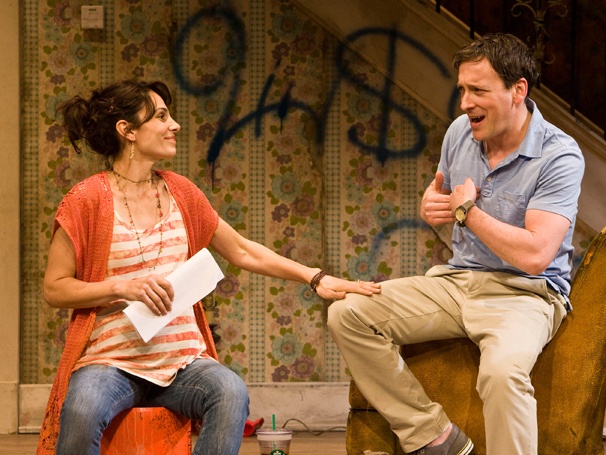
Annie Parisse and Jeremy Shamos in Clybourne Park.

While watching the first act of Clybourne Park, the new comedy by actor turned playwright Bruce Norris, you might find yourself wondering exactly what all the fuss is about.  While well written and ably performed, nothing about the play’s first hour seems to justify the mountains of praised heaped upon the work since its 2010 Off-Broadway premiere, which culminated in it winning of the Pulitzer Prize for Drama.  But by the time you reach the end of the howlingly funny second act, you realize that every word of Norris’ script was necessary to create the non-stop barrage of belly laughs and pointed sociological observations that make Clybourne one of the most entertaining and thought-provoking evenings of the current Broadway season.
Though set 50 years apart, both acts concern the impending arrival of unwanted residents in the fictional Chicago neighborhood which gives the play its title.  Wanting to escape the bad memories associated with their current home, 1950s suburbanites Bev (the excellent Christina Kirk) and Russ (the always outstanding Frank Wood) prepare to leave the all-white neighborhood of Clybourne Park in favor of greener pastures.  When it comes to light that the house has been sold at a deep discount to an African-American family (most likely the Youngers from Lorraine Hansbury’s seminal Raisin in the Sun, although that fact isn’t explicitly stated), Bev and Russ find themselves being harassed by their “concerned” neighbor Karl, played by a fantastic Jeremy Shamos. 
While Norris’ writing and Shamos’ acting ensure there’s more to Karl than just bigotry, it remains his overriding characteristic, and we are clearly meant to sympathize with the unseen black family.  Because of the distance provided by the period setting, it’s easy for us to sit in judgment of Karl, making the first act seem preachy and predictable despite its strong writing and convincing characterizations. 
But then Act II turns everything on its head by jumping ahead 50 years and reversing the races involved.  Clybourne Park, now an all-black neighborhood that has seen better days, is about to receive its first white residents in ages.  New owners Lindsey (Annie Parisse) and Steve (Shamos again, even better than before) plan to remodel the now historic building, prompting a meeting with the homeowners’ association that eventually leads to veiled accusations of racism and gentrification. 
Suddenly everything Norris wants to say becomes crystal clear, and you realize you had to sit through Act I to fully appreciate how far we have and haven’t come as a supposedly progressive society.  Norris expertly illustrates how even when talking about racism we don’t actually discuss it, since none of the characters really listen to what the others are saying, and all of the most racist comments come from characters voicing what they think is the subtext behind someone else’s words.  The second act is about everyday people who say occasionally racist things, and Norris forces us to ask the question, “Does that make them racist?”  The play offers no easy answers, making it all the more engaging.
The cast, who have been with the show since it’s Off-Broadway premiere, is uniformly excellent.  They all imbue their characters with a quirky specificity that adds volumes to the show’s charm without becoming grating or irksome, and everyone manages to create two fully realized people over the course of the evening.  The aforementioned Annie Parisse accomplishes the most drastic transformation – from a deaf housewife into a new aged “progressive” – with particular flair, and threatens to steal the show with her especially hilarious work in Act II.  Her Lindsey is a masterful satire on modern racism masquerading as liberalism, and yet Parisse plays her role without a hint of judgment on Lindsey’s increasingly misguided-if-well-intentioned worldview. 
Making her Broadway debut, Crystal A. Dickinson offers a fascinating look into the way modern racism is often a two-way street.  Her Lena devolves from a well-spoken individual with valid points into a vindictive, passive-aggressive antagonist who constantly invokes what has become colloquially known as “the black card.”  Her self-satisfied smugness as she gets under Lindsey and Steve’s skin is an excellent illustration of how any minority can take their righteous indignation too far, actually undermining their own cause in the name of advancing it.  (Dickinson also gets the biggest laugh of the evening with a joke that is, to put it mildly, extremely off-color.)
By the end of Clybourne Park, Norris has certainly earned his Pulitzer.  With a script that is simultaneously entertaining and intellectually stimulating, he leaves the audience with a lot to digest.  Along with the expert cast and superb direction by Pam MacKinnon’s (whose contributions cannot be underestimated), Norris’ script leaves you feeling satisfied and actually excited to go home and discuss the show with friends.  If that isn’t a hallmark of great theatre, then I don’t know what is.