The Tony Awards are getting closer every minute, and if I
want to finish these prediction articles before next weekend I don’t have time
for clever intros! As you read on,
please remember my two caveats: 1) I
have not seen all of the nominated shows; and 2) I am predicting who will win, which may be different from
who should win (a distinction that
will be further discussed in the body of the article).
Moving right along, here come the supporting men.
Best Featured Actor in a Play
Nominees:
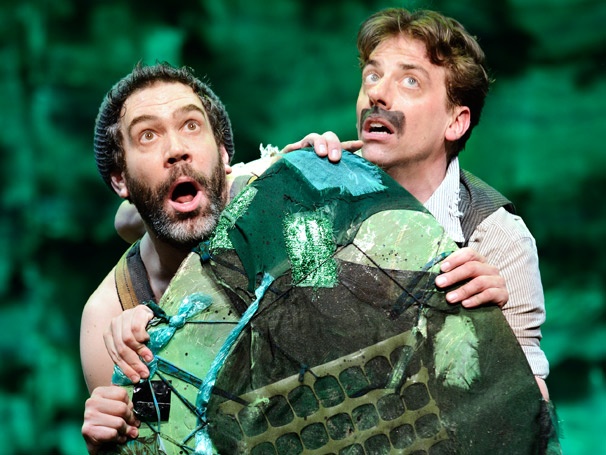
Christian Borle, Peter and the
Starcatcher; Michael Cumpsty, End of
the Rainbow; Tom Edden, One Man, Two
Guvnors; Andrew Garfield, Death of a Salesman; Jeremy Shamos, Clybourne Park
I’m not sure
how Michael Cumpsty managed to pull himself out from under the massive shadow
cast by Tracie Bennett in End of the
Rainbow, but good on him for securing one of the five Best Featured Actor
nominations. I hope he is proud of his
accomplishment, because a nomination is where his Tony journey ends. I suspect the same is true for Tom Edden in One Man, Two Guvnors. While the British import received a host
of nominations, I just don’t think it has enough industry buzz to actually win
any of the big awards, especially with such strong competition among this
season’s plays.
Jeremy
Shamos plays two miserable human beings in Clybourne
Park, and the fact that he can make you understand where they’re coming
from is a testament to both his performance and Bruce Norris’ writing. But the lack of nominations for his costars seems
to indicate Tony voters are more impressed with the work as a whole then the
individual performances, even though all are stellar. Shamos is a long shot for the Featured Actor
trophy, but he does have a shot, which is more than I’ll say for both Cumpsty
and Edden.
I think this
race boils down to Christian Borle versus Andrew Garfield, which raises the
eternal acting debate of comedy versus drama.
Which is more difficult, and therefore more worthy of praise when
executed successfully? Tony voters have
shown a proven bias toward both serious drama and Hollywood stars making strong
Broadway debuts. In Death of a Salesman, Garfield holds his own against some
established stage veterans while bringing new life and immediacy to a
well-known Arthur Miller role. This same
trick won Scarlett Johansson a Tony two years back, and I think Garfield has a
good chance of repeating her success.
Borle, on
the other hand, has been handed a gem of a role as Peter and the Starcatcher’s scenery chewing villain Black
Stache. After years of solid
performances, Stache seems to be Borle’s breakout role, and his work on NBC’s Smash has raised his profile to the
point where Tony voters can pretend that in picking him, they are honoring one
of the Hollywood stars they love so much.
Borle is also the well-liked Starcatcher’s
best shot at an actual win, and I think we’ll be hearing him gush about
what a fantastic year he’s had when they call him up to the podium on Tony
night. Poor Mr. Garfield will just have
to count his upcoming Amazing Spider-Man royalties
in consolation.
Will Win:
Christian Borle, Peter and the
Starcatcher
Should Win:
Andrew Garfield, Death of a
Salesman (not because Borle is bad, but because in this case I genuinely
believe what Garfield accomplished was harder)
Best Featured Actor in a Musical

Nominees:
Phillip Boykin, Porgy and Bess; Michael Cerveris, Evita; David
Alan Grier, Porgy and Bess; Michael
McGarth, Nice Work If You Can Get It; Josh
Young, Jesus Christ Superstar
I was
distinctly unimpressed with David Alan Grier’s performance when I saw Porgy and Bess back in January. The actor didn’t seem to have a proper handle
on his character, and the Sportin’ Life who sang “There’s a Boat That’s Leaving
Soon” was vastly different than the one who proclaimed “It Ain’t Necessarily
So.” Revisiting the show last month, I’m
happy to report that Grier has smoothed out a lot of inconsistencies in his
characterization, but I still doubt most voters would consider the performance
Tony-worthy.
Michael
Cerveris is probably the best thing about the current Evita revival, at least from an acting standpoint. Unfortunately, the role of Juan Peron is even
more underwritten than most Andrew Lloyd Webber roles, and even an actor Cerveris’
caliber can’t quite hide the fact that he’s working with pretty poor
material. Similarly, Michael McGarth
deserves a better show than the misguided Nice
Work. Despite being the most
reliably funny aspect of the show, I suspect a general indifference towards Nice Work will keep McGarth out of
serious contention.
Phillip
Boykin deserves to win this award, as his supremely
menacing Crown is the sort of operatic presence Porgy and Bess demands even in this revised musical version. Boykin is the only cast member who can hold
his own vocally against Audra McDonald, and he breathes full life into what
could easily become a cartoonishly evil character. If you need any proof of how well Boykin does
his job, just listen to the cheers that erupt from the audience when Norm
Lewis’ Porgy finally triumphs over the brute.
But a part
of me fears that Josh Young might just rain on Boykin’s parade. Young is the only nominee in this category I
haven’t personally seen, as he was out the night I saw Superstar. In fact, he was
out for a large portion of the preview period and the month immediately
following. While I know these actors are
only human, missing so many shows so soon in the run does make me question someone’s
Tony worthiness. Theatre acting is about
being able to turn in a stellar performance eight times a week; if you can’t keep
yourself healthy, or worse yet blow your voice due to poor singing technique,
then I don’t think you’re ready for theatre’s highest honor. The fact that Young got nominated despite all
his missed performances indicates he is either excellent receiving a large pity
vote, or both. I’m going to go with my
heart and predict Boykin wins, but I would not be surprised if Young’s name is
called on June 10th instead.
Will & Should Win: Phillip Boykin, Porgy and Bess
Catch up on my other Tony predictions below:
Featured Actress
Book & Score
Direction & Choreography

