Thursday, August 21, 2014

2014 Fall Preview: New Plays

A scene from the London production of The Curious Incident of the Dog in Night-time, one of several new works making the journey across the pond for the Fall season.


This past Monday saw the first preview performance of This Is Our Youth, meaning the Fall 2014 Broadway season is officially upon us. I've already taken a look at the many star-driven revivals coming to the Great White Way in the next few months; thankfully, unlike last fall's dismal showing of new plays (critical and commercial flops The Snow Geese and A Time to Kill), this fall has a few promising new works to balance out all those revivals. Hell, at least one of these plays is virtually guaranteed to be a sell-out hit, and given strong productions a couple of the others could also be at least critical if not necessarily commercial hits. So what's on deck for the fall? Find out below.

The Country House
Previews begin 9/9; Opening Night 10/2

One thing Manhattan Theatre Club can always be counted on for is attracting name talent to new works. I personally feel MTC's new plays trend a little too upper class and cerebral for their own good, but every once and a while the famed not-for-profit produces a daringly original and energetic piece like Venus in Fur. Unfortunately, The Country House sounds like par for the course at MTC (re: well-done but a little boring). Blythe Danner stars in this Donald Margulies play about a group of established and aspiring artists in a summer home in the Berkshires, with the explicit promise of "romantic outbursts" and "passionate soul-searching" along with an implicit promise of weighty discussions about art and culture. I actually enjoyed MTC's production of Margulies' Time Stands Still several seasons back, but this new work just sounds ponderous. I'm predicting respectable reviews and a respectable run, although it would take something unexpected for this play to take off and become a true hit.

The Curious Incident of the Dog in Night-time
Previews begin 9/10; Opening Night 10/5

The Curious Incident of the Dog in Night-time is the latest in a long, mostly distinguished line of new works originating in the West End. A hit oversees, the play centers on an incredibly intelligent but socially awkward teenage boy who is accused of killing his neighbor's dog, and his attempts to uncover the real killer. Coming to Broadway from London's prestigious National Theatre, this Olivier-winning play sounds a good deal more interesting and inventive than a lot of our home grown theatre, probably because England's government subsidized arts scene is a little more embracing of theatricality and invention (see War Horse). That said, some of these West End transfers lose something in the journey across the Atlantic, failing to live up to the hype generated by their reputations (see War Horse again). The reviews will probably dictate how well this does. If the critics embrace it, I expect it to settle in for a healthy run and potential Tony Awards; if they are lukewarm, it will probably close with relatively little fanfare. I am certainly curious, and just glad to see a high-minded drama that isn't solely concerned with the problems of upper class white people.

Disgraced
Previews begin 9/27; Opening Night 10/23

Like far too many plays, Disgraced concerns a group of upper class New Yorkers. But in this case, two of them are Muslim-American, and the play comes to Broadway having already won the 2013 Pulitzer Prize for Drama. Which is certainly enough to make anyone sit up and take notice, and of all the new plays scheduled for fall this is the one I am most interested in seeing. A contemporary take on a contemporary subject (the place of practicing Muslims in post 9/11 America), Disgraced sounds fresh and provocative, unlike the staid dramas that have taken over Broadway in the past few years. Barring some kind of creative implosion in the production, I expect this to be one of the more buzzed about works of the fall, and a clear early contender for Tony consideration come spring.

The River
Previews begin 10/31; Opening Night 11/16

The producers of Jez Butterworth's The River have scored the biggest casting coup of the fall: they somehow convinced box office magnet Hugh Jackman to star in this new play by a decidedly off-beat English playwright. Add in the fact that the Circle in the Square is one of Broadway's smallest houses and you have what is sure to be one of the hottest tickets in town. While The River's box office success is virtually assured - audiences have repeatedly proven they will turn up to see Jackman in just about anything - artistically the play is another story. I personally was underwhelmed by Butterworth's 2011 Tony-nominee Jerusalem (without the incomparable Mark Rylance that would have been a wasted 3 hours in the theatre), but many critics enjoyed the show and may again be charmed by Butterworth's work. I personally have no interest to see this play, which I suspect will be remembered much more as a financial success than an artistic one.

Constellations
Previews begin 12/16; Opening Night 1/13

Not much is known about this Manhattan Theatre Club production, other than the fact it will mark Oscar-nominee Jake Gyllenhaal's long-awaited Broadway debut. Something about the play must have enticed the notoriously choosey Gyllenhaal to Broadway, and it certainly wasn't MTC's not-for-profit pay scale. The official plot description of this West End transfer sounds heady - it is described as a "mind-bending" work that "defies the boundaries of the world we think we know" on MTC's website - which means it could either be an adventurous, inventive new work or a pretentious quagmire too caught up in its own premise to actually work. And while Gyllenhaal isn't a particular draw for me, he likely will be to a lot of other people, so hopefully this play turns out well.


And there you have the five new plays scheduled to open on Broadway in the next few months.  Check back soon for the final instalment of my Fall Preview series, which will focus on the musicals coming to Broadway between now and Christmas.  In the meantime, don't forget to catch up with part 1 of the series:

2014 Fall Preview: Play Revivals

Friday, August 15, 2014

2014 Fall Preview: The Play Revivals

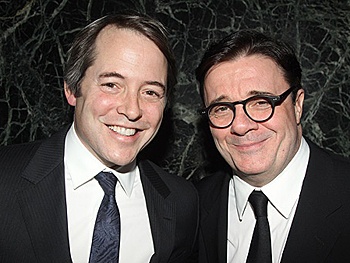
Tony winners Matthew Broderick and Nathan Lane are 2 of the many, many celebrities coming to Broadway this fall in limited run revivals.


The 2014-2015 Broadway stealthily began the week after the Tony Awards with the premiere of the ill-fated musical Holler If You Hear Me, something that already seems like a non-event in the grand scheme of things.  But we are getting ready to start the season proper, with several new productions beginning previews this month and many more scheduled from now until the lucrative holiday season.  And so I will be writing a three-part series previewing the upcoming season, examining all of the announced productions and giving a brief assessment of the probable level of success, both artistic and commercial.

We start with the plays, and like last year this coming season is jam packed with celebrity-led revivals.  Not everyone appreciates these shameless cash grabs (which can sometimes be of dubious artistic merit), although enough of them turn out well that I'm not about to dismiss the trend out of hand.  The productions also have a pretty good track record of making money, which the producers will hopefully pour back into riskier projects and not solely into more celebrity-led revivals.  So what revivals can star-struck theatregoers who need a break from singing and dancing look forward to this coming fall?  Find out below.

This Is Our Youth
Previews begin 8/17; Opening Night 9/11

This is one of those awkward situations where producers seem to think they've booked name talent but actually haven't.  Michael Cera is the biggest "name" here, and even in his home medium of film he has never been a consistent draw (the one-note screen persona he's cultivated probably doesn't help matters).  Cera and costars Kieran Culkin (younger brother of Home Alone's Mucauley Culkin) and Tavi Gevinson don't have nearly the drawing power as a Denzel Washington, Neil Patrick Harris or even a James Franco, which means that director Anna D. Shapiro better work the same kind of magic she did with August: Osage County if the show's to be successful.  The play, which explores themes of adolescence and maturity, sounds promising, but I'm taking a wait-and-see approach to this work.  If the buzz is good, I'm more likely to give it a chance.

You Can't Take It With You
Previews begin 8/26; Opening Night 9/28

This revival of the Pulitzer Prize-winning comedy has a much starrier cast than This Is Our Youth, headlined by the always engaging James Earl Jones.  Jones plays the head of the eccentric and slightly unhinged Sycamore clan as they entertain the more conventional family of their daughter's boyfriend.  The play, with a premise ripe for scene-stealing supporting turns by a cast of theatrical veterans, certainly has my interest, although it lacks the "it factor" which makes me feel compelled to buy a ticket.  Unless something goes horribly wrong, I expect this play to do good business and win decent reviews, although it remains to be seen if it will have the kind of legs to merit an extension and/or any serious Tony talk.

It's Only a Play
Previews begin 8/28; Opening Night 10/9

Terrance McNally's last Broadway outing Mothers and Sons left me cold, but the upcoming revival of his 1982 comedy It's Only a Play is one of my most anticipated productions of the fall season.  The cast assembled by the producers and director Jack O'Brien is stacked with name talent, most of whom have at least one Tony nomination (if not a win) to their name.  The idea of seeing such noted clowns as Nathan Lane, Megan Mullaly, and Matthew Broderick ham it up in the farcical-sounding work (about a Broadway producer anxiously awaiting the reviews for his latest play) is exactly the kind of thing I and a lot of people would be willing to pay big bucks for.  Unless it gets absolutely terrible reviews, I suspect this will be one of the theatrical events of the fall.

Love Letters
Previews begin 9/13; Opening Night 9/18

An last minute addition to the fall season, this revival of the A.R. Gurney drama about the lifelong friendship between an artist and a politician sounds like a complete snoozefest.  The entire play is told via a series of letters the pair exchange, meaning it is essentially a series of monologues read aloud to the audience.  I have never enjoyed Gurney's work; he focuses so specifically on the concerns of upper class whites it can be hard to relate to his plays if you don't come from a similar background.  The gimmick of this revival is that it will feature a rotating cast of name actors, starting with Brain Dennehy and Mia Farrow and eventually including the likes to Carol Burnett, Alan Alda, and Diana Rigg.  I personally think this revival is ill-advised (the rotating guest stars didn't do much to help After Midnight's sales, and these stars have even shorter runs that will be almost impossible to properly advertise) and likely doomed to failure.  I will certainly be skipping it.

The Real Thing
Previews begin 10/2; Opening Night 10/30

Roundabout's productions have been incredibly hit or miss over the past several seasons, so without more information it is impossible to know where this revival of Tom Stoppard's heady drama will land on the quality spectrum.  It does have the appealing prospect of Ewan McGreggor in his Broadway debut, with a supporting cast that includes Maggie Gyllenhall and Cynthia Nixon to give it both theatrical credibility and even more Hollywood sheen.  I'm expecting a competently staged and acted evening at the theatre, although I will admit that it isn't very high up on my list of things to see.

A Delicate Balance
Previews begin 10/20; Opening Night 11/20

Along with It's Only a Play, A Delicate Balance looks poised to become one of the more buzzed about Broadway productions of the fall.  Featuring Glenn Close's first Broadway appearance in 20 years, Tony-winner and multiple Oscar-nominee Close is joined by Tony- and Emmy-winner John Lithgow in this Edward Albee drama.  Directed by Pam MacKinnon, who worked wonders with the 2012 revival of Albee's Who's Afraid of Virginia Woolf?, this production contains great actors tackling a great script under the helm of a great director.  Assuming the stars are available and willing, I can easily see this extending for a month or two past its planned February closing date (which will give me more time to actually go see it).

The Elephant Man
Previews begin 11/7; Opening Night 12/7

This production is a wildcard for me.  On one hand, Bradley Cooper has racked up multiple Oscar nominations over the past couple of years, proving he is a much more versatile actor than his lowbrow performance in The Hangover would lead you to believe.  The Elephant Man is a respected property in the theatrical world that is a major showcase for its star, who plays the deformed John Merrick without the benefit of prosthetics or makeup.  But I wonder if director Scott Ellis, who is also directing You Can't Take It With You and On the Twentieth Century next season, is perhaps stretching himself too thin to really give this project the level of focus it deserves.  Cooper's name is probably enough to ensure good box office, but I am very curious to see what the verdict is on the artistic merits of this production.


And those are all the play revivals you can look forward to between now and Christmas.  Check back soon to see my take on this fall's upcoming new plays.

Friday, August 8, 2014

Should Race Be a Selling Point?

Norm Lewis made history as the first black Broadway Phantom when he joined the Broadway company of The Phantom of the Opera in May.  And while that is certainly noteworthy, I can't help but feel that maybe we are making *too* big of a deal about it.


Recently, some singer/talk show host I had never heard of was cast as the latest headliner in the terrible revival of Rodgers and Hammerstein's Cinderella.  Her name is Keke Palmer, and she will be Broadway's first black Cinderella.  This news story bothered me greatly.

Now, let's be clear:  I am most certainly NOT upset that an African-American woman will be headlining a Broadway musical about a fairy tale princess.  As a person of color who once dreamed of being an actor, I am all too aware of the difficulties facing ethnic actors today.  While we are slowly seeing more diversity in entertainment, the sad fact remains that a lot of casting directors still won't consider an ethnic actor for a part that doesn't explicitly call for that ethnicity.  Furthermore, the parts that do require an actor of color often make skin tone the role's defining characteristic, as if that is the only thing which could possibly necessitate casting a non-white performer.  And since most subsequent productions have a tendency to mimic the casting of the original, if the original actor wasn't black (or Latino, or Asian-American, etc.), then actors of those ethnicities often aren't seriously considered for the role even if race has zero bearing on the story.  So any instance of a traditionally white role going to an ethnic performer is something I am all for.

No, what bothers me about Ms. Palmer's casting is that the producers and press made such a big deal about her being the "first black Cinderella" on Broadway.  Every story went out of the way to mention Palmer's ethnicity, which makes me believe this is something that was explicitly pointed out in the press release as a way of drumming up extra attention.  Because honestly, the 4th replacement in a revival of a musical with middling box office probably wouldn't even merit mention if not for this one tidbit.  I will choose to believe that the producers of Cinderella didn't cast Palmer solely because of her race, but they sure don't mind using her skin color to get some extra publicity and perhaps stroke their egos in a self-congratulatory, "look-how-progressive-we-are" way.

My problem with this is that it makes skin color the defining characteristic of this actress.  The selling point of Palmer's casting is not her talent or her previous accomplishments; it is her skin color, something she has absolutely no control over.  This is even more baffling considering Cinderella, which won an Actor's Equity award for the diversity of its ensemble, has several other ethnic actors in principal roles without feeling the need to point out their heritage.  No one mentioned that Ann Harada is the first Asian-American Stepsister.  You know why?  Because it is Harada's talent that is her most important asset, not her ancestry, which is only one component of the many qualities and characteristics that make her unique.

A similar thing happened recently when Norm Lewis took over the title role in The Phantom of the Opera, Broadway's longest running musical.  Every news outlet, even those that normally don't cover Broadway, was suddenly talking about Phantom again because Lewis is the first black actor to play the role on Broadway in the show's 26 year run.  And while that is certainly an achievement, and a cool bit of theatrical trivia, why did that have to be the defining piece of news about his casting?  Again, my problem with spinning the story this way is that it places the emphasis on Lewis' skin color, something he has zero control over, and not his talent, something he has honed and sharpened over nearly 3 decades of performing.

Defining anyone primarily by their skin color is reductive (and borderline insulting).  By calling extra attention to race, we continue to train future generations to notice it and use it as a way to define people.  Even if the focus on Palmer and Lewis's heritage is well-intentioned, as a mixed-race American it makes me vaguely uneasy.  It deemphasizes individuality, and encourages people to make assumptions based on someone's outer appearance.

To me, the ideal treatment of race is how the subject was handled in Rent.  That show featured an incredibly diverse cast without making their diversity the central focus.  All of the various characters in Rent are treated as people first, with subtle nods to their ethnic backgrounds that provided extra spice without becoming their defining quality.  Very little is explicitly mentioned about any characters' heritage, meaning the show could theoretically be cast with any combination of actors.  It is generally cast to mirror the ethnic breakdown of the original cast, which goes back to the lack of imagination on casting directors' part, but that is an issue for another blog.  The pertinent point here is that it was diverse without making race its defining characteristic, one of the many ways in which the show was so groundbreaking.

Or to use a currently running example, look at Disney's The Lion King.  It features a largely black cast, which makes sense given the African setting and director Julie Taymor's wholehearted embrace of tribal design aesthetics.  Yet the show doesn't once call attention to the character's blackness (probably because they're all actually lions, but that is beside the point).  As Taymor has said in various interviews, The Lion King is a show that is not about race and yet all about race.  As she astutely points out, to white audiences it is the same story they know and love from the movie, and the ethnicities of the actors are a non-issue.  But to black audiences, it is very much the story of a black king trying to win back his kingdom, and sends a powerful message that people of color can be noble kings and queens too.  The brilliance of the show is that it allows for this reading without doing anything to emphasize it, which makes it even more progressive than the shows that call attention to their inclusiveness.

There is no denying that Broadway could use more diversity.  The country continues to become more ethnically varied, but the principal characters in most Broadway shows remain steadfastly white.  I am all for actors like Palmer and Lewis breaking barriers, but I think when we call too much attention to it we only exacerbate the problem.  I hope directors continue to consider and cast actors of all ethnicities in all roles (provided the show isn't explicitly about race and racism), but cease to call attention to the fact that they are doing so.  Calling attention to it ultimately reinforces the notion that race is something to obsess over and define people by, and that kind of thinking helps no one.  Trying to get brownie points for your affirmative action casting decisions is just tacky, and devalues the talent of the people you do hire.

Tuesday, August 5, 2014

Revive This: The Diva Edition

Several months ago, I posted what was intended to be the first in a semi-regular series about musicals I would love to see revived.  Now, many moons later, I have two more shows I'm dying to see some Broadway producer take a risk on.  One of the positive things about this upcoming season is the three announced revivals (On the Town, On the Twentieth Century, and The King and I) are all shows which, in my opinion, merit Broadway revivals.  They are respected properties that aren't produced with a great amount of frequency, and it has been close to two decades since any of them have had a major New York production, making them ripe to be refreshed and reimagined for a new generation.  (The much-rumored but yet-to-be-officially-confirmed transfer of the Kennedy Center's Side Show also fits this description, and I really hope producers announce a theatre and start date soon.)

Here are some other shows I'd like to see tackled on Broadway sooner rather than later:

My Fair Lady

If done right, a revival of My Fair Lady could "make it rain" in Spain and everywhere else; I think there's a lot of money to be made there.

My Fair Lady is, for me, one of the most frustrating musicals in existence.  The score is exquisite, overflowing with classic tunes in the Golden Age mold that just make my heart sing.  "I Could Have Danced All Night" has been attempted by almost every aspiring soprano in existence, but when someone really nails it the song is absolutely thrilling.  The characters and relationships are also much more complex than in your typical musical, and the show raises some really interesting issues regarding identity, appearance and self worth.

Unfortunately, the show is also alarmingly misogynistic.  Henry Higgins is an unforgiveable lout of a character who uses and abuses Eliza at almost every turn because he sees her as a thing instead of as a person, and unlike in George Bernard Shaw's Pygmalion, the musical's Eliza simply puts up with it.  I can't even watch the final minutes of the generally stellar film version because Rex Harrison's smug little grin as he says "Fetch me my slippers" upon Eliza's return makes me want throw everything within reach at the screen.

I would love to see a contemporary (female?) director and cast tackle this undeniably important musical through a modern, more feminist viewpoint.  A first rate revival could provide a blueprint for how future productions can address the narrative's disturbing social underpinnings, similar to how contemporary productions of Shakespeare's The Taming of the Shrew have to find a way to keep Kate strong while she essentially advocates female submission.  Even though I love a lot of Alan Jay Lerner's book, I wouldn't be opposed to slight revisions of the show's final moments to make it a more clearly about Eliza coming to realizer her own value independent of any male influence.  If it was up to me, the show would end with Higgins sobbing while he plays the recording of Eliza, which would simultaneously allow Eliza to embrace her own self worth (by refusing to put up with his bullshit) and make Higgins just a tad more sympathetic, since if played correctly the moment could be Higgins realizing that he did this to himself and not just sobbing because he didn't get the girl.

Caveat: I have ZERO interest in Clive Davis' proposed revival, because his statements about the show and Broadway in general prove he has no understanding of either the theatre or the property.  First of all, its hard to work in a medium as collaborative as theatre when you think no one has done anything worthwhile in decades.  And I don't understand why anyone would think Anne Hathaway, as brilliant as she was in Les Miserables, has the vocal ability to sing Eliza eight times a week.  (I will concede that Colin Firth would likely be an excellent Henry Higgins.)  I want a legitimate production starring actors with legitimate vocal and theatrical talent - someone like Gentleman's Guide Lisa O'Hare or a young Kelli O'Hara - and I want it done big.  Lincoln Center would certainly have the money to pour into a lavish physical production with a full orchestra (which would be essential), and their go-to director Bartlett Sher has proven that when you approach a musical as a drama first and foremost you can reap stellar results (see: South Pacific, The Bridges of Madison County).


Hello, Dolly!

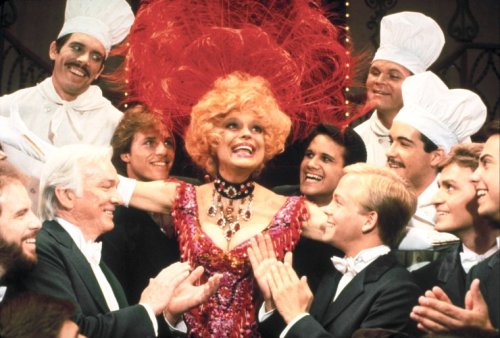
Carol Channing is so synonymous with Hello, Dolly! that producers have been hesitant to produce a major Broadway mounting without him.

Admittedly, part of my reason for wanting a Hello, Dolly! revival is that I have never seen it, and I'm curious what all the fuss is about.  But that larger-than-life reputation is also what makes Dolly such a prime candidate for a Broadway revival.  The show was a phenomenon when it premiered, and although its enduring popularity has led to plenty of regional and amateur productions, it has also caused the show to be looked down upon by certain segments of the theatre-going public.  Because the show is so associated with school productions and low-budget dinner theatre, a common conception is that it is not the type of show "serious" artists would waste their time on.

To which I say "hogcock!" (Tina Fey's brilliant portmanteau of "hogwash" and "poppycock," as heard on the dearly departed 30 Rock.Dolly is practically begging for a major New York production featuring the industry's best talent to restore the show's reputation as a fantastic example of musical comedy writing.  Also, the show is so closely tied to memories of Carol Channing - who originated the title role to Tony-winning effect and played it on Broadway and off for over 30 years - that it would be nice to see a different actress be given the chance to put her own stamp on it.

I believe the inevitable comparisons to Channing are the main reason no New York producer has been brave enough to tackle the show without her (the only Broadway outing not starring Channing was a brief, all black revival with Pearl Bailey in 1975).  You would have to cast a name star, someone who could sell tickets while still having the theatrical chops to actual pull off the role.  There was a brief period a few years back where producers were rumored to be courting Patti LuPone for a planned revival, but that production failed to materialize.  I would suggest a different bit of casting: Kristin Chenoweth.  The Tony-winner has not been shy about her desire to play Dolly, and I believe at this point in her career she has the mainstream clout to actual make a revival financially viable.  Like Channing, Chenoweth is a bit of an oddball comedienne, but in a very different mold - which would help limit comparisons - and she certainly has the comedic and vocal abilities to tackle the gargantuan role.  Plus, in my experience, seeing anyone perform their dream role is generally worth it, because they will pour every bit of themselves into the process.

Are you listening, Broadway?  Someone lock down Chenoweth before she goes back to Hollywood and her concert work.  Surround her with top tier theatrical talent and maybe one other bit of appropriate stunt casting to help guarantee ticket sales.  Don't skimp on the production costs, but don't go crazy either (please, no projections!).   I would be first in what I suspect would be a very long line to see her.

Thursday, July 24, 2014

A Reasoned Explanation of Why Some Shows Just Need to Close Already

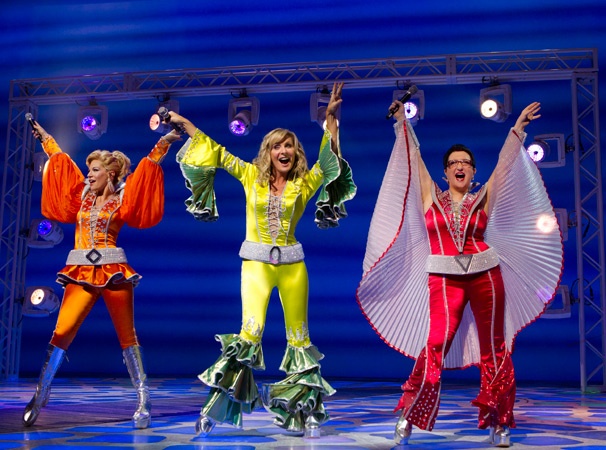
Sorry all you ABBA fans, but it's time for these "dancing queens" to retire.


Last season turned out to be a pretty prolific season for new musicals, with 12 brand new tuners officially debuting on the Great White Way.  But looking ahead at the 2014-2015 season, the situation is a lot less cheery.  Holler If Ya Hear Me already came and went, and looking at the currently announced shows for the next season, there are a whopping 3 new musicals scheduled to come to Broadway: The Last Ship, Honeymoon in Vegas, and An American in Paris. 

Yes, there are a handful of other musicals which have announced their intentions to come to Broadway next season, but as far as I'm concerned a musical isn't officially happening until it has a specific date and theatre lined up.  Even then, it isn't a done deal (see the very public collapse of Rebecca) but once those qualifications are met it becomes significantly more likely the show will happen.  So while a show like Finding Neverland (currently premiering at ART in Boston) will most likely come to Broadway, and shows like Bull Durham and Allegiance have announced intentions to come to Broadway sooner rather than later, they aren't guaranteed just yet.

Now obviously, any season that only produces 4 new musicals is depressing (especially when one of them has already flopped).  But what's more troubling is what this says about the current state of Broadway.  If you look at the Upcoming Broadway Shows list on Playbill.com, you can see the problem isn't a lack of new works.  After the 3 confirmed shows mentioned above, there are no less than 16 musicals with producers and creative teams attached that have announced Broadway intentions.  I count 9 shows that could reasonably be ready for a Broadway bow by spring 2015, as all 9 have already had world premieres or are scheduled to have them by this winter.  A few of them do have some well-documented behind the scenes troubles (Rebecca chief among them), but the majority of them are waiting on just one thing: an available theatre.

And that is what really bugs me about this upcoming season.  We have too many long-running productions on Broadway right now, many of which have become tired and a few of which weren't particularly good to begin with (for my purposes, long running means anything that premiered before spring 2013).  These productions are exclusively musicals, several of which wore out their welcome long ago, and as far as I'm concerned it would be better for everyone if those shows ended their runs to make room for new blood. 

Whenever someone expresses the sentiment that a show (or shows) need to close, certain segments of the industry are quick to point out that those shows mean jobs.  Now, I won't deny that Chicago and Mamma Mia! have employed a lot of people over the years, but the flip side of that is they have only employed a specific type of person.  If someone is not right for these shows (and many actors aren't), the productions' continued runs are actually preventing that actor from working by taking up theatre space which could be used for a show the performer is perfect for.  Both Mamma Mia! and Chicago long ago became the almost exclusive domain of tourists (or New Yorkers entertaining out of town guests), and there has also been a noticeable decline in quality in both productions.

When did it become the norm for a show to run for 10+ years? (Answer: the 1980s.)  The original production of Oklahoma! was considered an unprecedented smash when it ran for 5 years; in today's climate, a production with the kind of acclaim Oklahoma! received would be considered a mild disappointment if it "only" ran that long (many people were surprised when The Producers shuttered after 6 years).  This is a problem, in that it creates both unrealistic expectations for the vast majority of shows and eats up valuable theatrical real estate as producers try to chase these new standards.

Unless the production is poorly budgeted/horribly mismanaged, it really shouldn't take more than a couple of years for a Broadway musical to turn a profit.  Even a major musical like Kinky Boots, which had a capitalization of $13.5 million, managed to turn a profit in less than a year.  So rather than viewing a show as a disappointment for closing after 3 years, especially a profitable one that won good reviews and industry acclaim, I wish the theatrical community would celebrate a 3 year run as the achievement it is, letting more shows gracefully exit the limelight so new productions can take their place.

A perfect example of this philosophy is what Disney has done with Newsies.  Considering the excitement and strong notices that greeted the Broadway production, no one was particularly surprised when its "strictly limited engagement" became an open-ended run.  What was surprising was when the show, which still pulls in a very respectable weekly gross, announced it was closing at the end of the summer after a 2 year run.  Make no mistake, Disney could run this show longer if they wanted to.  Newsies could easily sustain itself until Christmas, and could probably limp along through next summer if it wanted.  After all, it recouped its capitalization ages ago, so as long as the weekly box office covers operating costs the show isn't hurting anyone financially.  But instead Disney has smartly decided to let Newsies go out while still on top, rather than wearing out its welcome and thereby damaging the show's overall brand.

It is a win for everyone involved.  The show turned a profit and made its producers money.  It has run more than long enough to be seen by everyone who was seriously interested.  From now until the end of time the show can be marketed as "the (Tony-winning) Broadway musical Newsies," with all the attendant prestige that description brings with it.  Without worrying about protecting the Broadway profits, Disney can tour and license the show to their heart's content.  And now the Nederlander Theatre is free to house a different show, increasing the number of new productions for the general public to consume.

Coming back to my original observation, I do believe the number of new musicals for next season will exceed the four announced, potentially by a lot.  There are several Broadway productions I have trouble seeing last through the holidays, and there are no shortage of shows looking for a suitable Broadway home.  As long as all the theatres that open up aren't snatched up by revivals (although I do hope Side Show finds a home sooner rather than later), next season should turn out fine.  But imagine how much more exciting things would be if some of Broadway's longer-running tenants packed up shop and let someone else move in.

Tuesday, July 15, 2014

No Damage Here; Heathers the Musical is *Very* Very

Review: Heathers the Musical

The original Off-Broadway cast of Heathers.

For reasons I can't quite fathom, the pitch black 1988 comedy Heathers has gained quite the cult following in the 25 years since its initial release.  The movie is a bizarre tonal cocktail of absurdist humor, exceedingly dark satire, and overwrought drama that becomes borderline unwatchable in spots.  I certainly wouldn't have chosen it as a property ripe for musicalization, but I am exceedingly happy Kevin Murphy and Laurence O'Keefe felt otherwise, as they have crafted an engagingly campy musical confection that manages to improve upon the source material in almost every way.

Westerberg High School is ruled by an all-powerful clique of popular girls, all named Heather.  The deliciously vicious Heathers have the power to make anyone and anything cool, and brainy outcast Veronica Sawyer manages to convince the Heathers to take her under their wing (thanks mostly to her masterful forgery skills).  When the mysterious, trenchcoat-clad J.D. arrives on the scene and begins dating the instantly smitten Veronica, he decides the Heathers are in need of some major social justice.  Soon J.D. has turned Veronica into an accomplice to murder, and it eventually falls on her to find a way to stop her homicidal boyfriend from enacting deadly social change on the entire school.

One of the film's major flaws is its unfocused, inconsistent tone, but Murphy and O'Keefe's book and score (the pair share equal billing on all aspects of the show) finds the perfect blend of campy, self-aware comedy and earnestness that allows you to laugh at the characters yet still empathizing with them during the narrative's darker portions.  Unlike their movie counterparts, the characters in the stage Heathers all have consistent, clear motivations, although even Murphy and O'Keefe can't quite figure out a compelling reason for Veronica to stay with J.D. so long after he reveals his true intentions.  The musical's script also has a clearer sense of escalating action, and the writers have expertly inserted the musical numbers among the book scenes.

And what fun musical numbers they are.  Between the two of them, Murphy and O'Keefe have been involved in some of the more inventive pop-influenced scores of the new millennium, including Reefer Madness, Bat Boy, and the Tony-nominated (yet underappreciated) Legally Blonde.  They are both in fine form here, whether it's in catchy numbers like the belty, bubblegum pop "Candy Store" or more earnest ballads like "Kindergarten Boyfriend."  Musically the songs are melodic while retaining an element of surprise, with vocal pyrotechnics that skirt the fine line between being impressive and obnoxious.  The harmonies and vocal writing are especially lovely, and the many duos and trios throughout the score give the show a nice, layered sound which helps offset the bombast of the group numbers.  Lyrically the show is also quite clever, and provides the denizens of Westerberg High with a unique vernacular that, to borrow a phrase from the titular clique, is "so very."

The young, unknown cast of Heathers is filled to the brim with talent, and they tackle the material with gutso and aplomb.  Understudy Cait Fairbanks went on in the role of Veronica the night I attended, and the young actress deftly navigated the role's vocal and emotional challenges.  Her Veronica is charmingly understated, a multifaceted creation who is believably taken in by the Heathers and J.D. without seeming stupid or losing her inherent likability.  Dave Thomas Brown is rakishly charming as J.D., with a strong tenor and an emotional accessibility that helps you understand what caused this teenage boy to think murder is the best way to deal with bullies.

As the titular Heathers, Jessica Keenan Wynn, Elle McLemore, and Kristolyn Lloyd are close to perfection, gleefully embracing their mean girl personas and mining their stage time for all it's worth.  Wynn, with her stunning good looks and beautifully mature voice, is a "mythic bitch" as the group's leader Heather Chandler, with her aloof line delivery and utter disdain for everyone making her the kind of character you love to hate.  Lloyd is a scene stealer as Heather Duke, the green-pinstriped number 2 and Wynn's constant punching bag.  McLemore makes the smallest impression as Heather McNamara, but provides solid support throughout and has a hysterical pill-popping scene with Veronica in the second act.  The trio's brilliance lies in their ability to work seamlessly as a unit (their harmonies are particularly nice) while maintaining their own individuality.  The actresses have three distinct personalities, so while you may not be able to keep the Heathers' surnames straight there is never any doubt about which Heather is which.

Director Andy Fickman stages the show with a workmanlike quality that keeps things moving and makes the plot-heavy narrative a breeze to follow, although he's done no staging favors by Timothy R. Mackabee's shallow, candy-colored set.  Amy Clarks' fantastically fun costumes invoke the 80s while avoiding that decades' more questionable fashion statements, making everyone in the cast both stylish and instant indentifiable.  Jason Lyons' lighting design adds to the brightly colored fantasia, and while Marguerite Derricks' energetic choreography doesn't quite mesh with the staging it is certainly fun to look at.

It's easy to roll your eyes at the ever-increasing number of musicals based on movies, but when the results are as giddily entertaining as Heathers the Musical it's hard to complain too loudly.  Although slightly overlong and a tad too reliant on ballads, Murphy and O'Keefe's script and score improves on the source material in almost every conceivable way.  The young cast gamely tackles the material with an infectious joy, resulting in a show that is intelligent, entertaining, and above all fun.  Unfortunately the show has announce an early August closing date, so those wanting to hanging with the popular crowd should head over to New World Stages before the Heathers saunter away forever.

Thursday, July 10, 2014

Willkommen Back

Review: Cabaret

Alan Cumming, reprising his Tony-winning role as the Emcee, leads the nubile denizens of the Kit Kat Klub in Roundabout's revival of Cabaret.


When Roundabout Theatre Company announced they were remounting Sam Mendes and Rob Marshall's acclaimed, Tony Award-winning production of Cabaret, the news was understandably greeted with some scepticism.  Roundabout made very clear that this would be a near exact recreation, boasting the same creative team and Tony-winning star - Alan Cumming, reprising his near-legendary performance as the Emcee - of a production that had only closed on Broadway 10 years prior.  It all sounded like a shameless cash grab, something the nation's largest non-profit was doing to finance the rest of its season rather than something born out of any artistic need or urgency.

Thankfully, while all of the above may be true, this resurrected Cabaret is a powerful interpretation of one of the undisputedly great musical dramas.  Nothing about Mendes' recreated staging feels canned or stale, and this representation of the decadent days proceeding the second World War is both highly entertaining and deeply unsettling.  This is a show with something important and downright challenging to say (an all too rare occurrence in contemporary musical theatre), and with the exception of one key piece of casting it is carried off with such artistic integrity and assurance that only a fool would begrudge Roundabout's return to the Kit Kat Klub.

For those who have never seen Cabaret, the show takes place in 1930s Berlin right before the Nazis' ascent to political dominance.  Bisexual American novelist Cliff Bradshaw moves to the city looking for inspiration for his next book, and is soon pulled into the exhilaratingly seedy world of the Kit Kat Klub, which is overseen by an otherworldly Emcee and headlined by the free spirited Sally Bowles.  Cliff and Sally move in together and begin a romance, while their landlady Fraulein Schneider is wooed by a Jewish fruit seller named Herr Schultz.  As the country's Nazi leanings become more pronounced, all of the characters are forced to decide whether to continue their carefree, pleasure-focused lives in the face of mounting political tension.

Cabaret remains a rock-solid piece of theatrical writing, featuring perhaps the finest collection of showtunes Kander and Ebb ever created during their 50-plus years of collaboration (this production has smartly incorporated several songs the pair wrote specifically for the movie, including "Mein Herr" and "Maybe This Time").  Joe Masteroff's libretto expertly juggles multiple plot threads while creating multifaceted characterizations, and the show tackles some very big issues in a way that is digestible without diminishing their importance or complexity. 

Co-directors Mendes and Marshall (who also handled choreographic duties) expertly guide the narrative with clarity and precision, nailing the juxtaposition of tones for maximum theatrical effect.  Celebrations of life's decadence such as "Willkommen" and "Two Ladies" are intoxicatingly delightful, while the scenes between Herr Schultz and Fraulein Schneider are positively charming.  But the show can turn on a dime to deeply unsettling, powerfully staged moments like "If You Could See Her," the Act I closer "Tomorrow Belongs to Me," or the show's chilling final tableau.  Mendes and Marshall make excellent use of Masteroff's book and Kander and Ebb's score to lull the audience into a false sense of complacency before springing the show's more disturbing elements on us, demonstrating just how easily anyone can be caught unawares by life's dark side.

All these years later, the Emcee remains Alan Cumming's signature role, and the Scottish actor is every bit as astounding as one could hope.  Cumming's voice remains virtually unchanged, and he exudes a carefree confidence tinged with a hint of menace.  Cumming is game for pretty much anything, from performing lewd gestures to dancing overtly sexual choreography to donning various androgynous costumes (or sometimes wearing almost nothing at all).  At first genial, Cumming becomes slowly unhinged and more antagonistic as the evening wears on, and by the time he asks, "Where are your troubles now?" during the finale, it's as much an accusation as anything else, implying that human selfishness is what allows tragedies like to Holocaust to happen.

As Fraulein Schneider and Herr Schultz, Linda Emond and Danny Burstein are close to perfection, with an easy chemistry and a gravitas that makes their relationship the heart of the show.  And while Burstein is well-known for his musical theatre chops, Emond's play-focused career has denied the world of hearing her fantastically strong voice until now.  Bill Heck acts the role of Cliff with conviction, and Aaron Krohn is excellent as Ernst Ludwig, the charming Nazi sympathizer made all the more unnerving by his utter normalcy.  The cast and ensemble (who also doubles as the orchestra) are uniformly excellent, with one very notable exception.

Unfortunately, that exception is Michelle Williams as Sally Bowles.  The Oscar-nominated actress is making her Broadway debut, and while no one can accuse her of resting on her laurels, she gives a deeply misguided and ultimately unsatisfying performance.  Probably miscast, Williams has moments of strength and a surprisingly sturdy singing voice (remember that Sally is supposed to be at best a second rate singer, a fact the movie ignored in favor of casting the excellent Liza Minelli).  But Williams' performance rings false thanks to a collection of character tics that don't really work for her.  She constantly shakes and has an entirely unplaceable accent, making it unclear whether Sally is an addled drug addict, putting on an adopted persona, on the brink of a nervous breakdown, or some combination of all three.  Whatever it is, it doesn't really click, making a character that has in previous versions been defined by her authenticity feel fake and untruthful.  It's also unclear what about this Sally makes Cliff, who as played by Heck clearly prefers men to women, stay with and ultimately fall in love with such a deeply damaged individual.

Everything and everyone around Williams is excellent, and there is plenty to recommend this revival (especially to those who missed the production the first time around).  But the role of Sally is such a pivotal one that Williams' labored performance does bring the show down a notch or two.  With another actresses in the role, this Cabaret would easily be one of the best things running on Broadway.  As is, it is still a strong production of one of the musical theatre's greatest dramatic works, an adult work just as interested in challenging the audience as it is in entertaining them. Fans of that kind of theatre should definitely head over to Studio 54 and heed Cumming's opening entreaties to "bleibe, reste, stay."