Saturday, December 22, 2012

Best Shows of 2012: #6


Best of 2012
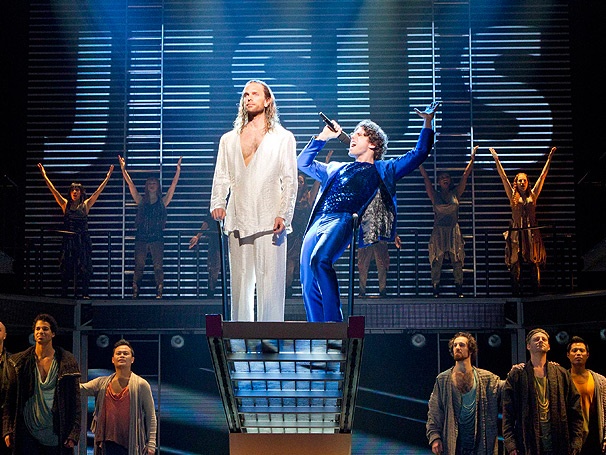
#6 – Jesus Christ Superstar

Jesus learns that living in NYC means ignoring the noise coming from right next to you.
 

Until last spring’s Broadway revival, I couldn’t even begin to fathom the enduring appeal of Andrew Lloyd Webber’s Jesus Christ Superstar.  An indulgently screechy rock opera written for singers with superhuman voices, the show features almost zero character development and a poorly scripted plot that’s nearly incomprehensible to those not already familiar with the story of Jesus Christ’s final days.  But after viewing director Des McAnuff’s pulse-pounding production, I finally “got” the show and why it has continued to appeal to generations of fans.

A dynamically engaging post-apocalyptic setting combined with McAnuff and choreographer Lisa Shriver’s propulsive movement gave this Superstar a drive few musicals can muster.  Each subsequent number would build upon the one which preceded it, and suddenly Lloyd Webber’s constant repetition of melodies and motifs felt purposeful and even necessary.  This staging successfully captured the giddy, over-the-top nature of a rock concert, while simultaneously adding unexpected depth to the show’s key interpersonal dynamics.  Now the relationships between Jesus, Judas, and Mary Magdalene weren’t just talked about but deeply felt, communicated through piercing stares and telling body language.

The entire cast deserves kudos for effortlessly highlighting the show’s hidden complexity and handling its vocal demands as well as any group of actors I’ve ever seen.  Paul Nolan’s pitch perfect rock tenor even managed to make the unending bombast of Jesus’ “Gethsemane” palatable, with the fact that he looked like the walking embodiment of every Renaissance painting of Christ serving as an added bonus.  Although I missed Josh Young’s Tony-nominated Judas due to the actor’s pervasive health issues, understudy Jeremy Kushnier was an entirely compelling anti-hero who genuinely struggled with the decision to betray his former friend.  And Chilina Kennedy’s Mary was the perfect foil for the two estranged friends at the show’s center, delivering the oft-sung “I Don’t Know How to Love Him” with refreshing honesty and conviction.

Jesus Christ Superstar will never be a great show, but this was a truly great production capable of converting even the show’s most ardent critics, myself included.  As a theatrical event and musical experience it exceeded all possible expectations, presenting a fresh take on the tired and at times overwrought material.  Unfortunately Superstar failed to find much of an audience and has long since closed, but those lucky enough to have seen it know why it was one of the Best Shows of 2012.


For a full review of Jesus Christ Superstar, click here.

Friday, December 21, 2012

Best Shows of 2012: #7


Best of 2012
#7 – Clybourne Park

Proof the white people should never, EVER attempt to "raise the roof."
 

Clybourne Park’s Broadway transfer almost didn’t happen.  Despite winning both the Pulitzer Prize for Drama and the Olivier Award for Best New Play, its planned Broadway bow was thrown into question when lead producer Scott Rudin withdrew from the production after a dispute with playwright Bruce Norris.  Thankfully producer/theatre owner Jordan Roth swooped in to save the show, as Clybourne Park’s mixture of black comedy and thought-provoking rhetoric made for a fantastically stimulating night at the theatre.

Set in the fictional Chicago neighborhood of Clybourne Park, Act I took place in 1959 and Act II took place in 2009.  The first half of the play concerned the imminent arrival of the neighborhood’s first black family (implied but never explicitly stated to be the Younger family from Lorraine Hansberry’s A Raisin in the Sun), while the latter portion dealt with a white family moving into the now all-black neighborhood.  This structure allowed the play to make many fascinating observations about how racism has and hasn’t changed over the past five decades, and if the first act seemed slow the near perfection of the second half not only elevated the evening but proved everything which preceded it was necessary to fully understanding what Norris had to say.

An actor himself, Norris managed to create two equally compelling sets of nuanced characters, making the racially-charged dialogue feel organic rather than didactic.  Norris also expertly avoided the trap of oversimplifying his arguments, letting every character make valid points which challenged the audience’s beliefs.  It was refreshing to see both black and white characters portrayed as equally right (and wrong), and that quality helped make Clybourne Park an especially satisfying encapsulation of the endlessly complex subject of race.  Even better, the play managed to tackle all of these topics while remaining laugh-out-loud funny, providing a welcome respite from the weighty matters being discussed.

The cast of Clybourne, all of whom originated their roles in the play’s world premiere Off-Broadway, was ideal.  Under the razor-sharp direction of Pam MacKinnon, the seven-strong company was a master class in ensemble acting, supporting and playing off one another with delightful ease.  With every actor tasked with portraying two characters (one in the first act, one in the second), the specificity and nuance in their characterizations became all the more impressive.  Their chameleon-like nature allowed the audience to fully immerse itself in the play’s world, and kept the focus squarely on Norris’ crackling dialogue.  The deserved winner of this year’s Best Play Tony, Clybourne Park gave audiences the perfect blend between art and entertainment, and that is why it is one of the Best Shows of 2012.


To read my full review of Clybourne Park, click here.

Thursday, December 20, 2012

Best Shows of 2012: #8


Best of 2012
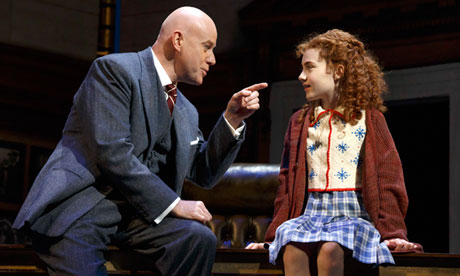
#8 – Annie

Anthony Warlow and Lilla Crawford are the two stellar stars of James Lapine's handome new Annie.
 

When it first opened on Broadway in the spring of 1977, Annie received near-universal acclaim and became so prolific that even people with zero interest in musical theatre knew it by name.  The show about the little orphan with the big heart has since become synonymous with the sun-drenched optimism that typifies classic musical comedies, and in an increasingly cynical world that earnestness has made it a subject of scorn and derision.  It’s easy to forget that behind that relentlessly positive outlook lies a solidly constructed tuner just waiting for the right production to reveal its multitude of charms.

James Lapine’s splashy revival is just such a production, shedding the decades of baggage and expectation Annie brings with it to emerge as one of the year’s freshest pieces of escapist entertainment.  By focusing on the text and the truth of the show’s world, Lapine and his actors have reached a level of earnestness that makes the many songs about hope and positivity feel both genuine and necessary.  The show’s version of Depression-era New York is unabashedly naïve, but that viewpoint is wholly appropriate to the musical’s child protagonist and its message about the value of looking on the bright side of life.

Lapine has found an extremely talented group of young women to embody Annie and her orphan pals, and their unbridled enthusiasm proves to be infectious and one of the show’s strongest assets.  In a performance sure to result in a Tony nomination, Anthony Warlow’s Daddy Warbucks is sublime perfection, with his growing fondness for Annie creating some unexpectedly moving moments.  Two-time Tony-winner Katie Finneran may not be doing her best work as the villainous Miss Hannigan (and the show does suffer because of it), but the comedic actress brings plenty of raucous energy and a particular gift for physical comedy to the scene-stealing role.

Annie’s family friendly nature ensures it will be many children’s first exposure to the wonders of live theatre, and from the opening chords of the overture until the final curtain young audiences are sure to be utterly enchanted.  But fun has no age limit, and anyone who remembers (or would like to remember) the joy and limitless possibilities of youth will find plenty to appreciate in this handsome staging.  Here’s hoping that this Annie has many, many tomorrows in its future.


For my full review of Annie, click here.

Wednesday, December 19, 2012

Podcast Episode 4: Fall Season Wrap-Up

As 2012 fades into 2013, Jared, Brian, and Christopher look back at the past six months on Broadway and the many productions of the fall season.  Which shows impressed the most, and which ones missed the mark?  Find out as we discuss our favorites and which shows we fully expect to see among next year's Tony nominees.
 

Tuesday, December 18, 2012

An Off-Kilter Family Christmas


Review:  A Christmas Story
A Christmas Story finally fulfills Broadway's long-standing need for a production number centered around a leg-shaped lamp.
 
Despite its prolific holiday airings on multiple TV stations, I have never actually seen the much beloved film A Christmas Story.  Therefore I cannot judge the musical incarnation, currently playing a limited engagement at Broadway’s Lunt-Fontanne Theatre, on its fidelity to the source material, although judging by the anticipatory laughter from the packed house I assume most of the movie’s major comedic beats survived the transfer intact.  Reviewing this adaptation on its own merits, I unfortunately must report that it’s a hit or miss affair that features promising new talent led astray by some dubious directorial choices.

A Christmas Story tells the story of young Ralphie Parker, whose only goal in life is to receive a Red Ryder Carbine Action BB Gun for Christmas, despite his Mother’s repeated protestations.  “You’ll shoot your eye out,” she warns.  Ralphie’s Old Man isn’t any more receptive, being more preoccupied with winning a crossword competition and repairing the many, many broken devices around the family’s cozy Indiana home.  Ralphie’s quest for the Red Ryder Gun is really just a framing device that allows the show to explore the various mishaps that befall Ralphie and his family as they prepare for the holidays, which include various schoolyard antics, a pair of pesky bloodhounds, and some questionable home décor.

Given the saccharine sweet nature of most holiday offerings, it’s refreshing to see A Christmas Story present such an off-kilter take on traditions like visiting Santa, picking out a tree, and the all-important Christmas dinner.  While the plot gets stretched mighty thin in order to fill a two-and-a-half hour musical, the characters are endearingly quirky and the less-than-perfect holiday shenanigans feel relatable and authentic.  Joseph Robinette’s libretto commits no major sins, even if a few more sections of overt comedy would have been welcomed.  And the score by Broadway newcomers Benj Pasek and Justin Paul is a delight, establishing the young songwriters as talents to watch.

It’s unfortunate the show suffers from such uninspired direction by John Rando, the Tony-winning director of the similarly cheeky Urinetown.  Rando’s flat staging makes poor use of the stage and Walt Spangler’s set, and fails to provide the speedy pacing that would help disguise the book scene’s shortcomings.  Many of the solos end up feeling static due to Rando’s minimalist staging, but thankfully A Christmas Story also features a smattering of fantasy sequences that are a visual delight.  The Western-themed “Ralphie to the Rescue” casts the dozen-strong youth ensemble as rough-and-tumble gunslingers and sassy saloon wenches, and the speakeasy-set “You’ll Shoot Your Eye Out” is far and away the evening’s highlight.  One of the most adorable things you’ll ever see, the young performers dress up as little gangsters and flapper girls to perform a showstopping tap number that features the best dance solo currently on Broadway, made even more impressive by the fact that dancer Luke Spring is only nine-years-old.

In fact, the kids prove to be the strongest members of the show’s cast.  As Ralphie, Johnny Rabe carries the show with aplomb and finesse, acting and singing like a seasoned pro.  Zac Ballard is adorably weird as Ralphie’s younger brother Randy, throwing himself into the show’s physical comedy with the kind of abandon only a child can muster.  Jack Mastrianni and John Babbo are particularly funny as schoolyard bullies Farkus and Dill, and Jeremy Shinder’s goofy best friend Flick proves to be a welcome addition.

When it comes to the adults, John Bolton and Erin Dilly give their all as Ralphie’s Old Man and Mother respectively, but both actors are ultimately betrayed by some questionable writing and a lack of strong direction.  Bolton adeptly switches from bellowing brute to misunderstood everyman, but these personality shifts lack motivation and result in a schizophrenic performance (although his “A Major Award” production number is a winner).  Dilly’s Mother is suitably maternal, a frazzled but loving housewife who only wants what’s best for her family.  Despite some lovely vocals and fine acting from Dilly, Mother’s two songs fail to add anything interesting to her character, slowing the show down rather than enhancing it.  The rest of the adult ensemble fails to make much of an impression good or bad, and is quickly forgotten once they leave the stage.

Ultimately, A Christmas Story has a lot of things going for it.  A holiday show for those who don’t like holiday shows, it evokes the spirit of the season without resorting to cloying sentimentality.  It’s an exciting Main Stem debut for the promising songwriting duo of Pasek and Paul, who between this and Off-Broadway’s Dogfight are having quite the breakout year.  There are certainly worse ways to spend a December evening, and the show’s scheduled two month limited run seems about right for this particular musical.  A Christmas Story’s imperfections are ultimately a part of its charm, and those looking for a holiday treat will find plenty to enjoy.

Thursday, December 13, 2012

Best Shows of 2012: #9


Best of 2012
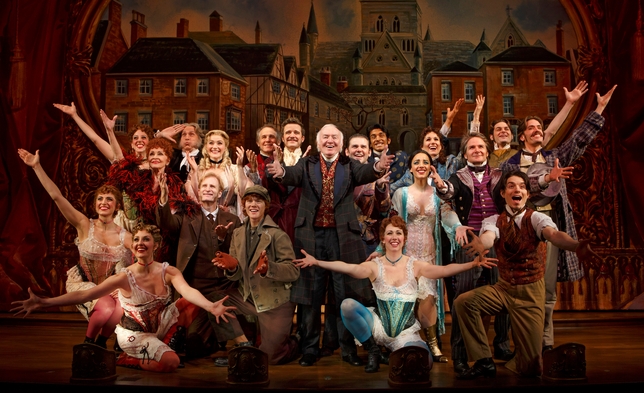
#9 – The Mystery of Edwin Drood

Damned if there you are!
 
I firmly believe that Rupert Holmes’ The Mystery of Edwin Drood is one of the worst musicals ever written.  Based on Charles Dickens’ unfinished last novel, the show is two hours of uninteresting exposition and merely passable songs that mark time until we reach the musical’s central gimmick, which is letting the audience vote on the mystery’s solution and thereby choose the show’s ending.  The nearly incomprehensible “plot” and exceedingly shallow characters require a top-notch production to mask their many deficiencies and make the show even vaguely tolerable.

Thankfully, the Roundabout Theatre Company’s current Broadway revival is a top-notch production.  Filled to the brim with outstanding performances, the talent involved elevates Drood into a musical confection that’s still devoid of meaning but so much fun you hardly care.  Stephanie J. Block has found the perfect vehicle for her many talents, with her turn as the title character equally highlighting her skills as a musical comedienne and her nearly unmatched vocal prowess.  In any other show, a performance of Block’s caliber would make her the unequivocal star, but this production features so many outstanding supporting turns that Block is but one jewel in a musical crown.

Rising star Jessie Mueller demonstrates remarkable range as the fiery Helena Landless, proving just as entrancing here as she was playing the ingénue Cinderella in this summer’s Into the Woods.  As the musical’s master of ceremonies, Jim Norton turns what could be a rather bland role into one of the year’s great comedic performances, hamming things up with delightful abandon.  Will Chase chews the scenery with infectious, giddy delight as the musical’s villain, and as the object of his lascivious desires Betsy Wolfe is a dream.  The show also boasts Chita Rivera’s return to the Broadway stage after a six year absence, and this living legend proves that she’s still got it.  The sets and costumes are just as impressive as the starry cast, with William Ivey Long’s gorgeous Victorian outfits a particular standout sure to net the designer his umpteenth Tony nomination.

Roundabout’s Broadway productions have been hit or miss in recent seasons, but The Mystery of Edwin Drood is a definite hit.  The not-for-profit has given this musical a far better production than it deserves, and those high standards have resulted in one of the most entertaining musicals of the year.  Anyone looking for a carefree night of bawdy jokes and hammy performances will absolutely adore Drood, and even the most ardent Scrooges in the audience won’t be able to resist cracking a smile or two.


For my full review of The Mystery of Edwin Drood, click here.

Monday, December 10, 2012

Everything is Bigger (and Better) in Texas


Review:  Giant
Giant stars Brian D'Arcy James and Kate Baldwin share an intimate moment.
 
Giant, the latest work by the prolific if not quite mainstream composer/lyricist Michael John LaChiusa, is by no means a perfect musical.  It struggles against the weight of its own ambition and the confines of the Public’s Newman Theatre, and yet remains thoroughly engaging for the majority of its three hour runtime.  Giant is theatrical proof of the old adage that those who shoot for the moon and miss still land among the stars, and for all of its flaws this fascinating show demands to be seen by any fan of serious musical theatre.

Based on the novel of the same name by Edna Ferber, Giant chronicles three decades of life on a sprawling Texas cattle ranch called Reata.  Jordan “Bick” Benedict is the proud owner of this enormous swath of land, and Giant begins with his whirlwind courtship and marriage to wealthy Virginian socialite Leslie Lynnton.  A stranger in a strange land, Leslie struggles to come to terms with her new surroundings and the husband she hardly knows, while Bick fights to prevent former ranch hand Jett Rink and his government backers from drilling for oil on the previously unspoiled land. 

Like any good epic, Giant features a host of interrelated subplots vying for the audience’s attention, and it must be noted that LaChiusa and librettist Sybille Pearson haven’t quite found the proper balance among the various storylines.  Certain characters and incidents seem superfluous when viewed in the context of the larger narrative, while other elements feel underdeveloped or completely forgotten.  While it’s difficult to pinpoint any one portion of the show in need of major rewrites, a series of minor edits and subtle tweaks in focus would result in a more cohesive and integrated whole.  Everything in this current incarnation is exceedingly well done, but it doesn’t always feel necessary, and as a result interest starts to flag over the course of the musical’s long length.

Thankfully, Michael John LaChiusa’s score is nothing short of brilliant. Rapturous, lush, and gloriously sung, LaChiusa’s sweeping melodies are the product of a master working at the height of his artistic prowess.  LaChiusa manages the difficult trick of writing songs that feel familiar but also unexpected, traveling through a host of musical genres while maintaining a tonal cohesion that keeps the entire score sounding like the a unified vision.  One song segues beautifully into the next, and when you least expect it LaChiusa seamlessly incorporates a recurrent motif without resorting to full-fledged reprises.  The music soars, with lyrics that are at once conversational and poetic, and it is almost impossible not to be swept away by the grandeur of it all.

While LaChiusa’s score is the show’s unabashed highlight, the musical’s large cast proves equally masterful.  Anchoring the show with the greatest performance of his career, Brian D’Arcy James plays family patriarch Bick with the best possible mixture of bravado and sensitivity.  He radiates love for both the land and his family, even if his rough and tumble upbringing doesn’t always allow him to express it fully.  James’ buoyant physicality and expressive face communicate volumes without speaking, and his nuanced delivery of the show’s many soaring anthems establishes such a strong connection with the audience that his presence is felt even when he isn’t onstage.

The ever-radiant Kate Baldwin similarly astonishes as Leslie, displaying an even greater amount of the star quality that netted her a Tony nomination in the recent revival of Finian’s Rainbow.  Her Leslie is a complicated creature torn between her love of Bick (and later, their children) and her dissatisfaction with the life and social mores of rural Texas.  Yet Baldwin never allows Leslie to wallow in self-pity, displaying the quiet strength and steely determination we’ve come to associate with the great Southern women of American literature.  She also sings like a dream, navigating the tricky demands of LaChiusa’s score with the assured ease of a master vocalist.

PJ Griffith does excellent work as the musical’s pseudo-antagonist Jett, embodying the Good Old Boy archetype with sincerity and style.  It’s unfortunate the show doesn’t quite know what to do with him, as Jett never really feels connected to the other characters or to the story in general despite amble stage time.  Bobby Steggert and Mackenzie Mauzy are quite charming as Bick and Leslie’s children, although again the show doesn’t make full use of the characters’ potential.  Katie Thompson’s Vashti Hake Snythe has an even more tangential relation to the plot, but the commanding actress emerges as one of the evening’s highlights thanks to several outstanding solos.  The only person resembling a weak link is Michelle Pawk as Bick’s elder sister Luz Benedict, but after struggling with her first solo the actress recovers nicely.

Director Michael Greif and set designer Allen Moyer have done an excellent job squeezing this sprawling show into the relatively modest confines of the Newman Theatre, although their inventiveness only goes so far.  Creating a second level onstage to house the orchestra is a clever idea, although Greif’s insistence on placing some of his actors up there muddies the effect by bringing more focus to the already prominent musicians.  Moyer’s attempts at sweeping Texas vistas don’t quite read as such given the shallow stage, although the excellent lighting by Kenneth Posner goes a long way toward helping evoke the open sky.  Overall, the show looks lovely, even if the self-editing necessitated by the theatre’s size constraints is a little too apparent.

Giant is easily the most ambitious new musical of the season, and for that it must be commended.  Ferber’s novel was clearly a tough nut to crack, and the fact that the show does so much so well is a testament to the skill of all involved.  A top-notch cast and stunning score by LaChiusa make this an extremely rewarding show for theatre aficionados, and anyone with the slightest interest in Giant should make a point to see it before it closes this weekend.  Hopefully some adventurous producer will pick up the show for a Broadway transfer, as a larger theatre and one final round of revisions would make this one of the truly great musicals of the past 15 years.  But even in its current incarnation, this is a show that demands to be seen, and a shining example of the artistic heights the modern musical can achieve.