Showing posts with label patina miller. Show all posts

Tuesday, March 25, 2014

Revive This!

Even though no one I know seems particularly excited by the prospect of the 3rd Broadway production of Les Miserables in as many decades, we're got it anyway, and it's selling out.


The splashy, often star-studded revival is something the theatre has a love/hate relationship with.  On the one hand, since theatre is not a fixed medium like film or print, the only way to expose new audiences to classic shows is via revival.  The best revivals help remind people of the brilliance of past hits, while also allowing works that were ahead of their time to receive the appreciation and attention they deserve.  Revivals can also provide a road map for making seemingly dated shows work for contemporary audiences via script and structural tweaks (with the creators' permission, obviously).  And of course, there's the thrill of seeing theatrical greats tackle some of the medium's juiciest roles.

On the flip side, you can argue that every revival produced steals funding and talent from a new work that probably needed it.  And if the show in question is just not very good, a revival can feel like a massive waste of time and resources that could have been used to mount a better show.  Adding to the sometimes barely hidden resentment towards revivals is the fact that the window between productions continues to shrink; this Sunday saw the opening of the 3rd incarnation of Les Miserables to play Broadway in the last decade, and Roundabout is bringing back their Tony-winning Cabaret a mere decade after the exact same production closed at the revamped Studio 54.

In this (hopefully) semi-regular series, I'm going to call attention to the shows I feel are deserving of a revival; if I was a producer, these are the shows I would try to make happen.  What makes a show "deserving" of revival?  While there are no hard and fast rules, generally speaking the show in question needs to be well written.  However, if a show has one strong element and another not so strong element (for instance, a great score with a problematic book), it may still merit the kind of rexamination/retinkering modern revivals seem to have little qualms about doing.  Also, for my tastes there needs to have been a good amount of time since the show's last major New York production (20 years or more, typically), as that seems to be the point when a production can begin to be judged on its own merits and not just mercilessly compared to what came before.

With all that in mind, here are a couple of shows I would love to see revived on the Great White Way sooner rather than later.

Crazy for You

Very rarely can you go wrong with pink ruffles in a musical comedy.

This is the show Nice Work If You Can Get It wanted to be, but wasn't.  A reworking of Gershwin standards into a new story that loosely parallels their 1930 romp Girl Crazy, Crazy for You is one of the best musicals to come out of the artistic wasteland known as the early 90s.  Because they had the entirety of the Gershwin catalogue to draw from, the creators were able to cherry pick the best tunes to create a score that is overflowing with classics like "Someone to Watch Over Me," "They Can't Take That Away from Me," and "Nice Work If You Can Get It."  Even better, all of those amazing songs are folded so seamlessly into the show's central plot about an aspiring dancer trying to save a run down theatre that they feel as if they were all written specifically for the show.  Also, the book is charmingly old school in its comedic sensibilities, with a rapid fire set-up/punchline rhythm that feels both contemporary and timeless even 20 years after its premiere.

This show just makes you feel good, and it is a damned entertaining spectacle with showstopping production number after production number.  There's a fantastic tap routine for the male lead and female chorus early on set to the catchy "I Can't Be Bother Now," a couple beautiful pas de duexs for the male and female leads, and the glorious 8-minute "I've Got Rhythm" that closes Act I puts even the recent Anything Goes revival to shame.  Speaking of Anything Goes, that revival's Tony-winning choreographer Kathleen Marshall would be the perfect person to helm Crazy for You, as her choreography has the whimsical inventiveness needed to make this show sing.  Susan Stroman would also be an excellent choice, but as she won her first Tony Award for choreographing the original I say let's get a new perspective on the whole thing.

Unfortunately, because of its similarities to the ill-advised and underwhelming Nice Work, I think we are at least 5 years removed from any potential Crazy for You revival.  Which is a shame, because I really believe if they had done Crazy for You instead, the show would still be running.


Once on this Island

When Paper Mill Playhouse produced Once on this Island a couple of seasons back, I was really hoping for a Broadway transfer; sadly, that never materialized.

This early Flaherty and Ahrens work (who we'll pretend aren't involved with the underwhelming Rocky) is an absolute delight, and I wish some adventurous producer would take a chance on reviving it.  The show isn't a guaranteed hit, but it also can be done with a smallish cast and minimal set, so the capitalization and running costs would be relatively low.  The plot, about a peasant girl who saves the life of a rich noble and falls in love with him, has the same timeless quality of Romeo & Juliet (even if Island's ending is decidedly more bonkers).  The show is family friendly - it uses a framing device in which the plot is literally being told to a young girl to calm her down during a storm - with just enough sophistication and racial/class undertones to hold adults' attention.

At the end of the day, it's the gem of a score that makes this show worth revisiting.  There are beautiful ballads and rousing uptempos, plus some inventive storytelling and musical scenes.  The music is also just begging to be tackled by powerhouse singers who can belt it to the rafters, and the ensemble nature of the piece means lots of performers would get their chance to shine.  In fact, the biggest knock I can make against the show is that it's a bit too predictable in its structure (every named character, without fail, is given a solo), but with a lean 90 minute runtime that is in no way detrimental to its overall effectiveness.  I would love to see someone like the Roundabout Theatre Company revive this for a limited run (with the option to extend), although it doesn't quite fit into that non-profit's established brand.

Bonus casting idea: Patina Miller as Asaka, Mother of the Earth.  Just imagine how fierce the Tony winner would sound singing "Mama Will Provide."


I have plenty of other ideas; if you have any, feel free to share them in the comments!

Thursday, May 30, 2013

2013 Tony Predictions: Best Actress


The Tony Awards draw ever nearer, and we have finally worked our way up to the most prestigious performance categories.  The leading actor and actress races are typically home to the type of tour de force performances that become Broadway legend, and winning the Tony against such strong competition is definitive proof that someone has “made it.”  So which actresses will join the ranks of Broadway’s greatest and take home the coveted Best Actress statuettes (and who actually deserves such recognition)?  Keep reading to find out.


Best Actress in a Play

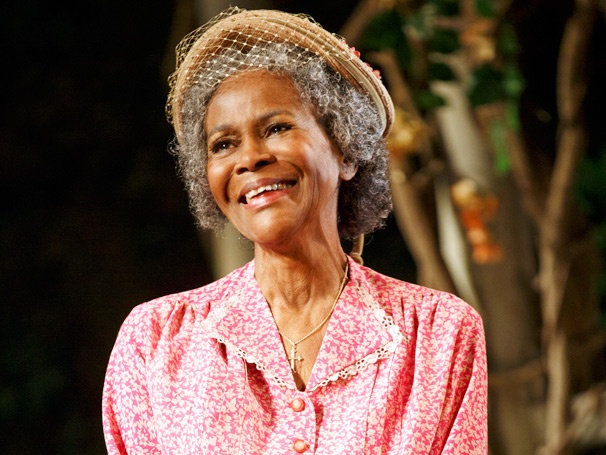
Emmy-winning veteran Cicely Tyson returns to the stage after a three decade absence in Roundabout's acclaimed revival of Horton Foote's The Trip to Bountiful
 
Nominees:  Laurie Metcalf, The Other Place; Amy Morton, Who’s Afraid of Virginia Woolf?; Kristine Nielsen, Vanya and Sonia and Masha and Spike; Holland Taylor, Ann; Cicely Tyson, The Trip to Bountiful

 
There are some truly masterful performances nominated in this category, and it’s difficult to argue against any of these women.  Of the five nominees, I’m sad to say Amy Morton has the smallest chance of winning.  While a fascinating Martha in Who’s Afraid of Virginia Woolf?, Morton ended up playing second fiddle to Tracy Letts’ George.  Critics are used to seeing that power dynamic reversed, and underplaying a role has not been the path to Tony glory in the past.  And Holland Taylor’s nomination has more of an air of respectful acknowledgment than passionate support, which means that when push comes to shove she will not be the first (or second or third) actress people vote for.

Kristine Nielsen is an interesting case, as she has won several awards already for her work in Vanya and Sonia.  But every other awards race has deemed Nielsen a supporting actress, and some voters may feel her role is not substantial enough to merit Best Actress.  Which leaves Laurie Metcalf and Cicely Tyson, both of whom received across the board raves for their performances.  In fact, I would say the raves for Metcalf were slightly more ecstatic, but her show closed several months ago while Tyson’s premiered late in the spring season.  And considering that Tyson has already won the Outer Critics and Drama Desk awards for her performance in The Trip to Bountiful, she becomes the clear frontrunner here.  This race is Tyson’s to lose.

Should Win:  Laurie Metcalf, The Other Place
Will Win:  Cicely Tyson, The Trip to Bountiful


Best Actress in a Musical

 
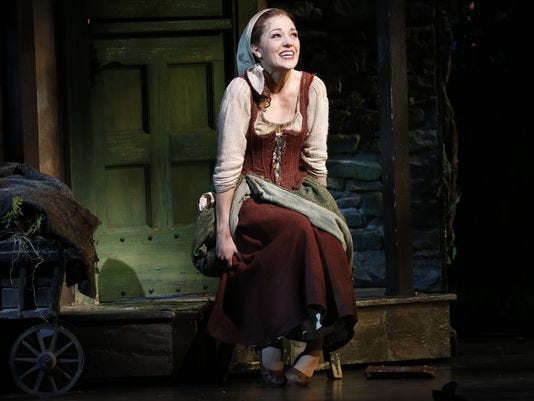
The charming Laura Osnes has lived her own Cinderella story, going from unknown actress on a TV talent show to a Tony-nominated leading lady.

Nominees:  Stephanie J. Block, The Mystery of Edwin Drood; Carolee Carmello, Scandalous; Valisia LeKae, Motown the Musical; Patina Miller, Pippin; Laura Osnes, Cinderella

 
No disrespect to the nominated women, but this year’s Best Actress in a Musical category is one of the weakest in recent memory, lacking the kind of outsized diva performances that usually make this race so interesting.  On the positive side, whoever wins will be a first time Tony recipient, virtually guaranteeing a tearful and heartfelt acceptance speech.  I really enjoyed Stephanie J. Block in Drood, and the part showcased her various talents with panache, but the borderline supporting role sidelined her for much of the second act.  Drood also closed months ago, although it is still more recent than Carolee Carmello’s turn in the short-lived Scandalous.  And while I’m sure Valisia LeKae is lovely as Diana Ross in Motown the Musical, I just don’t think the show or the actress has enough support behind her to snag one of Broadway’s highest honors.

This is a two horse race between past nominees Laura Osnes and Patina Miller, and I would say they are pretty evenly matched.  Miller is giving the more overtly impressive performance as the Leading Player in Pippin, displaying a surprising affinity for the Fosse-esque choreography and utilizing her trademark powerhouse vocals to great effect.  But many people, myself including, feel like Miller is trying too hard, and her aggressive need to impress the audience is not the most endearing quality.  Meanwhile, Osnes is widely liked within the industry, as evidenced by her ability to get nominated among last year’s much more competitive field for her work in the little seen Bonnie and Clyde.  She is also perfectly cast as the title character in Cinderella, a show Tony voters are clearly high on despite the questionable rewrites by Douglas Carter Beane. 

I think in their hearts, most Tony voters want to see Osnes win this award, which would be the ultimate validation for someone who initially rose to fame on a reality TV show.  But Miller’s performance is mighty impressive, and I suspect she would have won two years ago if it had not been for Sutton Foster’s fantastic turn in Anything Goes.  This race is almost too close to call, but my gut is telling me to give Osnes the edge.

Should Win:  Patina Mille, Pippin
Will Win:  Laura Osnes, Cinderella

 
Check back soon to see my predictions for the Best Actor races, followed by the production awards.  In the meantime, catch up with all of my previous Tony coverage here:

 
Best Featured Actress
Best Book and Score
Best Choreography and Direction
Tony Nomination React

Thursday, April 25, 2013

They've Got Magic to Do, and It's Extraordinary


Review:  Pippin
Because it wouldn't be a Fosse show without canes and top hats.
 

There’s no reason to mince words:  Diane Paulus has done it again.  Her revival of Pippin, like her Hair and Porgy and Bess before it, takes a classic piece of musical theatre and effortlessly modernizes it, imbuing it with a vibrancy and relevance that feels wholly contemporary while still respecting what made the show popular to begin with.  Ambitious in scope and stunningly theatrical, this Pippin is above all a celebration of the magic of live performance, a sumptuous feast for the senses brought to life by one of the finest ensembles of this Broadway season.

The story of Pippin is (very) loosely based on the life of the eldest son of King Charlemagne, who ruled over all of Western Europe at the start of the ninth century.  Well-educated but without much purpose in life, Pippin spends the show searching for fulfillment through various pursuits including war, political activism, and even the pleasures of the flesh.  This is all presented as a show-within-a-show performed by a group of traveling Players, enacted for the audience’s enjoyment at the behest of their leader (appropriately called the Leading Player).  The narrative is not without its problems; the libretto by Roger O. Hirson definitely shows its age, and despite some incredibly catchy numbers it is clear this show represents Stephen Schwartz before he gained full command of his musical gifts.

What Pippin needs, and what it gets in Paulus, is a director with a definitive concept to shape the production around.  Paulus’ stroke of genius is making the Players members of an actual circus, similar in style to Cirque du Soleil.  In conjunction with Gypsy Snider of the circus troupe Les 7 doigts de la main, Paulus has filled this revival to the brim with dizzying displays of athletic superiority and acrobatic prowess.  Performers jump, dive, and climb into a mind-boggling array of positions and pairings, all while singing and dancing the Fosse-inspired choreography by Chet Walker.  Between the aerial work, tumbling, knife throwing, fire juggling, and copious amount of magic tricks, your jaw is guaranteed to drop in amazement at least once over the course of the evening.  Yet for all the feats of human agility on display, Paulus keeps a remarkable grip on the actual narrative, portraying it with more clarity and genuine heart than it probably deserves. 

Paulus’ inspired direction is expertly executed by her top-notch cast, a mix of Tony-nominated veterans and Broadway newcomers that are all completely at home here.  As the Leading Player, Patina Miller follows up her star-making debut in Sister Act with another full-throttle performance.  Tackling the song-and-dance role head on, Miller belts to the rafters and uses her lithe frame to embody the Fosse style with surprising dexterity, all the while charming the audience into submission with her winning smile.  In fact, the only complaint that can be leveled against Miller is that she sometimes seems to be working too hard, with her performance lacking the ease of the most accomplished stage actors.

Matthew James Thomas plays Pippin with the appealing earnestness of a young man looking to find his way in the world, and manages to do so without coming across as whiny or petulant.  The character is underwritten and a bit of a cipher, but Thomas more than makes up for it with his winning personality and rock-tinged tenor.  Terrance Mann gives a delightfully hammy performance as Charlemagne, oscillating between doting father and imposing authority figure with ease, and his real life spouse Charlotte d’Amboise portrays his onstage wife, Queen Fastrada, with the perfect mix of political cunning and feigned ignorance.  Finally, special recognition must be given to Tony-winner Andrea Martin’s scene-stealing turn as Pippin’s grandmother Berthe.  Over the course of one ten-minute scene, Martin manages to make one of the strongest impressions of the night and leaves the audience practically begging for more. 

Pippin’s intentionally garish production design only adds to the show’s overall charm, from the barely-there costumes of Dominique Lemieux to Scott Pask’s big top-inspired set.  This revival is a triumph, a coup de theatre that celebrates all that is magical about the Great White Way.  With her bold but wholly organic direction, Paulus has rescued a work in danger of becoming dated and brought it crashing into the 21st century, appealing to modern sensibilities while still honoring the show’s roots.  There’s plenty of magic to be found in this production, and anyone interested in seeing it should buy their tickets now before they disappear.

Tuesday, February 19, 2013

The Glorious Music of Something Beginning


Review: Ragtime in Concert
Ragtime concert director Stafford Arima with stars Norm Lewis, Lea Salonga, and Manoel Felciano
 

There were many stars on the stage of Lincoln Center’s Avery Fisher Hall during last night’s concert presentation of the Stephen Flaherty-Lynn Ahrens-Terrance McNally musical Ragtime, but over the course of the evening it became clear that the biggest star was the work itself.  A staggering masterpiece virtually unequalled by anything in the musical theatre cannon, Ragtime juggles its interweaving narratives with a breathtaking assurance that is a feat unto itself, with the Flaherty/Ahrens score serving up an unending parade of some of the most soul-stirring music ever composed for the Broadway stage.  When the writers joined the cast onstage for the final bow, the unassuming trio fittingly received a thunderous ovation befitting a work of this magnitude.

Ragtime’s score draws upon a host of distinctly American musical genres, all of which were excellently rendered by the 36-piece orchestra under the baton of conductor Sheilah Walker.  Few musicals manage to have the breadth and musical variety of Ragtime while remaining a sonically coherent whole, but between Flaherty’s writing and the orchestra’s excellent playing nary a note sounded out of place.  In addition to the principals, many of whom were past Tony winners, the ensemble was rounded out by veterans of various other Ragtime productions and a hundred-strong chorus which gave the sumptuous score with even more oomph than usual.  The cast’s rendition of the sprawling opening number was positively electric, as was their take on the soaring ballad “New Music” and the triumphant final reprise of “Wheels of a Dream” that serves as the show’s finale.  But the truly transcendent moment came during the Act I closer “Till We Reach That Day,” which steadily built from a mournful solo sung by the sensational NaTasha Yvette Williams into a roof-rattling crescendo with an emotional intensity that shook the audience to its very core.

Among the principals, Tony-winner Lea Salonga made the strongest impression with her gloriously sung and exceedingly well-acted Mother.  After a somewhat tentative start which perhaps stemmed from overplaying the character’s reserved nature, Salonga steadily grew in confidence and intensity throughout the night to deliver a stunning sucker-punch of a performance.  By the time she reached Mother’s big ballad “Back to Before” near the end of the second act, Salonga’s command of the stage and inner strength fully enveloped the cavernous hall, creating a genuine showstopper which was appropriately greeted by rapturous applause.

As Tateh, a poor Jewish immigrant pursuing the American dream, Manoel Felciano (Tobias in the John Doyle-helmed Sweeney Todd) brought tremendous warmth and a soothing tenor to his many ballads, with his rendition of “Gliding” proving particularly moving.  Felciano also shared a genuine chemistry with Salonga that made their two duets (“Nothing Like the City” and “Our Children”) immensely satisfying.  The gifted actor held everyone in rapt attention whenever he was onstage, and it’s a shame New York audiences haven’t had more chances to appreciate this gifted actor’s many talents.

Rounding out the show’s central trio was Norm Lewis as Coalhouse Walker, Jr., the black piano player from Harlem struggling to rise above the many indignities he faced at the hands of intolerant bigots.  Lewis seemed less assured than Salonga and Felciano, failing to fully convey Coalhouse’s quiet dignity and occasionally struggling to meet the demands of Flaherty and Ahrens’ score. Despite these problems he still managed to sell the rousing ballad “Make Them Hear You,” even if the performance failed to fully eclipse the ghost of Brian Stokes Mitchell in the original Broadway company.

Michael Arden did excellent work a Mother’s Younger Brother, communicating the restless aimlessness of youth while using his piercing tenor to effortlessly reach the back of the balcony.  As Father, Howard McGillin remained true to his character’s racist tendencies while simultaneously showing Father’s softer side, thereby keeping the character from descending into cartoonish villainy.  Tyne Daly was a veritable force of nature as real-life anarchist Emma Goldman, and young Lewis Grosso made for a charmingly precocious Little Boy.

Unfortunately, there was one obvious weak link in the cast, and that was the Sarah of Patina Miller.  Any actress tackling the role of Coalhouse’s doomed lover has the unenviable task of living up to the memory of Audra McDonald’s legendary Tony-winning performance, but even grading on a curve the Sister Act star failed to impress.  Her voice is ill-suited to the role, as the belting on which Miller’s made her name is stylistically inappropriate to classically-influenced show, and in attempting to avoid that trap she became too preoccupied to give a good performance.  “Your Daddy’s Son,” one of the show’s most gut-wrenching songs, fell oddly flat when Miller sang it, although the actress mostly regained control of the role after that initial (and major) misstep.

As the inaugural production of Manhattan Concert Productions’ Broadway Series, this Ragtime has set an exceedingly high bar for any future installments.  Hopefully the organization will continue producing star-studded mountings of shows whose size and/or subject matter make them risky commercial ventures but that don’t necessarily fit the obscure Golden Age offerings City Center’s Encores! specializes in.  Even with a few hiccups, the evening was a resounding success, and yet another example of the unfettered brilliance of Flaherty and Ahrens’ most famous work.

Friday, December 23, 2011

Worst of 2011: #4

Worst Shows of 2011
#4 Sister Act

Patina Miller and the cast of Sister Act


The creators of Sister Act are going to have to say a lot of Hail Marys to atone for the multitude of sins committed by this movie adaptation gone awry.  It’s not often that a show manages to insult my intelligence *and* offend me, but Sister Act did both with such ease it’s almost scary.

One of the show’s many unforgiveable sins is the absolutely atrocious, anachronism-filled book.  I shudder to think what the show was like in London if Douglas Carter Beane’s many rewrites are considered actual improvements.  The show makes a point of being set in the 1970s (presumably to compliment Alan Menkin’s disco-infused score), but almost all of the jokes and the manner in which they’re delivered are supremely contemporary.  They also aren’t particularly funny, making the choice even more irritating.

The script also suffers from particularly uneven characterization, oftentimes violating the show’s established rules in an attempt for laughs.  The biggest example of this comes during the number “It’s Good to Be a Nun,” in which the members of the convent complain about the various aspects of life as a nun, like early mornings prayers and hours of meditation and self-study.  Now last time I checked, nobody in modern day America is forced to join a convent, and if these nuns are all so miserable why don’t they just leave?  The song would have been equally effective if the nuns had been enthusiastic about their lives, highlighting the fish out of water scenario lead character Delores finds herself in while actually being true the characters onstage. 

Which points to a larger problem with the show: although not Catholic, I left the show vaguely offended by the way the show continually mocked the Catholic faith and those who choose to live by it.  You would expect The Book of Mormon, from South Park creators Trey Parker and Matt Stone, to be the most offensive show of the year when it comes to religion, but I genuinely feel like it has a greater affinity for the religion at its core.  Mormon pokes fun at some of the religion’s tenants, but never crosses the line into condemning those who lead their lives based on those teachings.  Sister Act actively judges all of its characters, condemning them for choosing to participate in such a deeply ritualized faith, and yet expects us to simultaneously empathize with these women.  Talk about mixed messages!

Outside of the various structural problems, the performances in Sister Act are all over the map.  Patina Miller is clearly talented and generally quite strong in the role Whoopi Goldberg made famous, but her performance lacks that spark of vitality you expect in a big budget musical comedy.  After playing 2 years on the West End prior to coming to Broadway, Miller’s performance has started to feel stale, as if the actress is on autopilot.  Victoria Clark’s Mother Superior also doesn’t quite work, although for reasons harder to pinpoint.  On its own, her dry and understated delivery is often hilarious, but since everyone else in the show opts for a much broader acting style, Clark seems oddly out of place.

The musical takes forever to get going, with much of its first act wasted on unfunny one-liners and god-awful subplots involving the male characters.  The men are actually so poorly written and haphazardly performed, that an easy way to determine the entertainment value of an upcoming scene or song is to ask yourself, “Do I see a male onstage?”  If you do, it’s an excellent time to check your program or go to the bathroom.

Sister Act disappoints on so many levels that it makes my blood boil.  Unlike some screen to stage transfers, the show actually has a premise that naturally lends itself to musicalization.  And while I enjoyed the Whoopi Goldberg film of the same name, it is by no means one of my favorites, so I don’t have a problem with the stage version’s decision to jettison large swaths of the film in favor of original material.  What I do have a problem with is almost all of those changes being for the worse.  I’m personally hoping the show posts a closing notice soon, and puts all of us out of Sister Act’s misery.