Wednesday, January 8, 2014

Most Anticipated of Spring 2014

Idina Menzel and the cast of If/Then.  You just *know* she's belting her face off.


Now that we are officially in 2014, it is time to start looking forward rather than back (which I did in my two Best Of 2013 posts as well as my Worst Of list).  There are 20 new productions opening on Broadway this coming spring, and somewhat surprisingly they are evenly divided between plays and musicals.  Any new Broadway show is cause for celebration, but naturally there are some shows that I'm looking forward to more than others.  So here, in no particular order, are the productions I'm most excited to see in the coming months.

Aladdin

Full disclosure:  Aladdin has always been my favorite Disney film.  I have been hoping for a stage adaptation for the last 10 years, and I will finally get my wish when the show arrives on Broadway in March.  I'm not sure exactly how they'll translate the film's magic to the stage (the Genie's mile-a-minute dialogue and transformations seem like a particular challenge), but 16 years ago no one thought they could make The Lion King work and that show has gone on to gross $1 billion on Broadway alone.  I have full faith in the technical prowess Disney's money can buy, and I also have supreme confidence in the musical comedy chops of director Casey Nicholaw, whose work on The Book of Mormon remains the greatest example of sustained hilarity in the new millennium.  Final bit of disclosure: I bought my orchestra tickets to this show last month. :-D

The Bridges of Madison County

I have zero knowledge or particular interest in either The Bridges of Madison County novel or the film version starring Meryl Streep and Clint Eastwood.  But I do have extensive knowledge and admiration for the musical career of composer Jason Robert Brown, who is scoring the musical adaptation set to begin previews on Broadway in a couple of weeks.  Brown is one of the smartest pop-influenced composers working in the theatre, and I have no doubt his score will be a marvel to behold.  The fact that he has enlisted Kelli O'Hara to take on the lead female role makes the entire enterprise even more exciting, as she is one of the most gifted singing actresses of her generation.  Add in the fact that Tony-winner Barlett Sher is at the helm and has described the score as the best one he's ever worked with (remember the Sher introduced the world to Adam Guettel's rapturous Light in the Piazza) and you have the makings of a theatrical event.

If/Then

10 years after her Tony-winning turn in the smash-hit Wicked, Idina Menzel finally returns to the Broadway stage in If/Then.  That information alone would be enough to pique my interest; the fact that the show is written by Next to Normal's Tom Kitt and Brian Yorkey, who crafted one of the most fascinating musical dramas of the past decade and wrote an incredible diva role for eventual Tony-winner Alice Ripley, shoots this towards the top of my must see list.  Menzel has some able-bodied support in costars like LaChanze (whom I adored in The Color Purple) and fellow Rent alum Anthony Rapp, and the incredibly talented Michael Grief directing her.  All the ingredients for theatrical magic are there, and I cannot wait to see what this team has come up with.

Violet

Two words:  Sutton Foster.  Foster is one of the select few performers who can prompt me to buy a ticket based on her name alone, as she has never been anything less than stellar in every show I've been privileged enough to see her in (even when the actual shows left me cold, as was the case with Little Women).  She has one of the purest belts in the contemporary theatre, along with the acting chops and sheer charisma to hold your attention even when she isn't singing.  And while I know almost nothing about Violet, which had a very brief Off-Broadway run in the 1990s, everyone I know who has actually heard the music raves about it.  Composer Jeanine Tesori also has the distinction of having written Thoroughly Modern Millie, the show that shot Foster to stardom and her first Tony Award, so seeing the two reteam on this new project is doubly exciting.

Rocky

I am in no way, shape, or form convinced that this adaptation of the Oscar-winning film will actually work as a musical.  In fact, it could be a disaster of epic proportions.  But Stephen Flaherty and Lynne Ahrens wrote one of the greatest musicals of all time (if not THE greatest) in Ragtime, and the rest of their catalogue is equally lovely.  The pair are also famous perfectionists, constantly rewriting and revising their shows in an effort to make them as good as they can possibly be, so I have to believe that there was something about Rocky that drew them to the project.  Good or bad, I think Rocky will be one show the entire industry is talking about come spring, and I want to see it firsthand.  Whether I leave praising its triumphs or deconstructing its missteps remains to be seen.


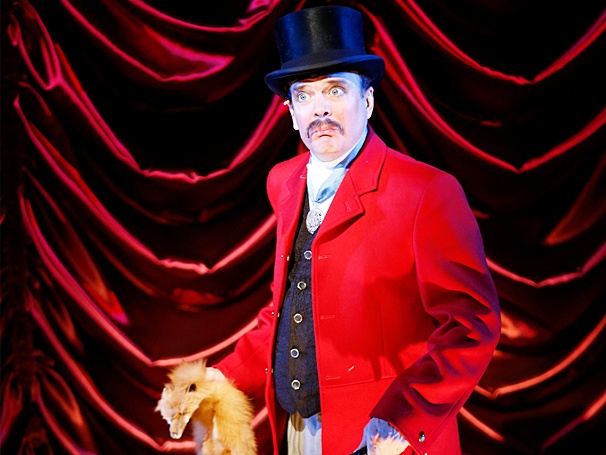
I wish I could say I was excited about the plays that are opening this spring on Broadway, but the truth of the matter is none of them grab me the way the above musicals do.  Like everyone else, I was blown away by Bryan Cranston's performance on Breaking Bad, and I fully believe he will make an excellent stage actor, but the out-of-town reviews for All The Way were lukewarm (many critics felt the play was too long and unfocused).  I personally thought Denzel Washington was overrated in Fences a couple of seasons back, so the idea of him doing A Raisin in the Sun doesn't thrill me.  And while I find the idea of Debra Messing starring in a comedy by Pulitzer-winner John Patrick Shanely appealing, it isn't a must see for me.  I *am* excited to see Alan Cumming reprise his Emcee in the Roundabout's remounting of their Tony-winning Cabaret (since I missed it the first time around), but at the end of the day they are just dusting off a production from 15 years ago that may or may not still feel relevant.

What are you most looking forward to for the coming spring season?  Feel free to let me know in the comments.  And look for reviews of as many of the spring shows as I can get to in the coming months.

Wednesday, January 1, 2014

The Worst Shows of 2013

Every year, I like to do a snarkier, far less goodnatured companion to my Best Shows of the Year lists (which you can see here and here).  Because as much as I wish it wasn't so, some shows are just bad, and there's no excuse for that in a city with such a wealth of talented, knowledgeable theatre professionals.

So here, for your reading enjoyment, is my Worst Shows of 2013 list.  Just like my Best Shows list, for a production to be eligible it must have: 1) opened during the 2013 calendar year; and 2) been seen by yours truly.  The good news is that this year, I couldn't even come up with my standard list of 5, which means either the shows were generally better this year or I was better at avoiding the real stinkers.  The shows with the "honor" of making this list were not just bad, but so bad that I found them to be an insult to the art form and those of us who love it.  I know there's at least one choice that's going to cause some controversy, but I fully stand behind my naming these shows the four least enjoyable things I've seen this year.

4) The Glass Menagerie

Cherry Jones and Celia Keenan-Bolger; two superbly cast, horribly directed actresses in Broadway's latest Glass Menagerie.

I'm sure many will disagree with this choice, as the current Broadway revival of The Glass Menagerie has ended up on many critics' Best Of lists, with several going so far as proclaiming it the best production of the play they've ever seen.  I don't know what production those critics saw, but the show I witnessed was a prime example of good material ruined by bad direction.  Menagerie may be a "memory play" with a certain dreamlike quality to it, but that doesn't give director John Tiffany permission to hopscotch from abstract concept to abstract concept mid-performance.  Celia Keenan-Bolger's first entrance from inside the couch is a striking visual, but it sets up a convention that is never again revisited and therefore seems extraneous in hindsight (no other characters makes an entrance or exit nearly as interesting).  The choreographed interstitials, seemingly left over from Tiffany's Tony-winning musical Once, are the definition of random, and provide no useful service to either character development or narrative structure.  The four actors are well cast, but then poorly directed to the point where none of the roles land the way they need to for the piece to truly sing.  While I appreciate Tiffany's choice to emphasize the play's comedy as a way to free it from the baggage of being a Great American Drama, he has defanged the play (and the character of Amanda in particular) to the point where the final scenes have none of the poignancy or resonance they were clearly meant to.  I know I'm in the minority with this opinion, but I truly don't understand what all the fuss is about, which is doubly disappointing as this was one of the fall shows I was most excited to see.

3) Cat on a Hot Tin Roof

At least Scarlett Johansson and Benjamin Walker are easy on the eyes.

On paper, reviving Tennessee Williams' Pulitzer Prize-winning Cat on a Hot Tin Roof with Tony-winner Scarlett Johansson sounds like a surefire recipe for success (and you haters can shut your mouths, because she was outstanding in A View from the Bridge).  But the first of many poor decisions made by the producers was booking the cavernous Richard Rodgers Theatre, which is simply too big for the scale of this play.  The actors were practically swallowed by the gargantuan set and playing space, and compensated for it by screaming most of their lines in a desperate attempt to fill the space.  This need by the entire cast to push, perhaps at director Rob Ashford's encouragement, robbed the play of all subtly and variance in emotional intensity, resulting in a very long evening of deeply unhappy people yelling at each other.  And not in a good way, as in other Pulitzer Prize winners like Who's Afraid of Virginia Woolf? or August: Osage County.  Here's hoping the critical and commercial failure of this production doesn't scare the supremely talented Johansson away from Broadway forever.

2) Little Miss Sunshine

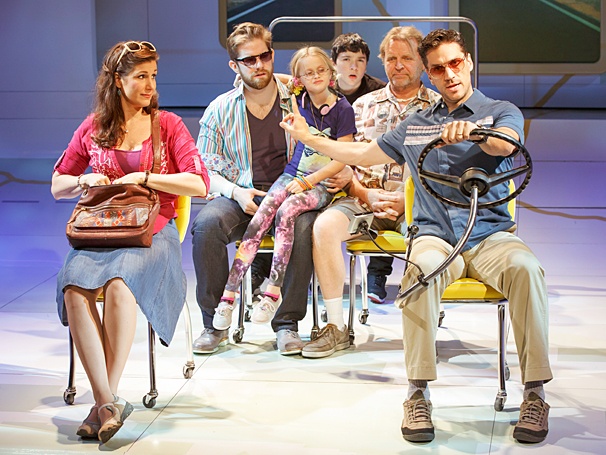
"I can't answer the question, 'Are we there yet?' No one knows what direction this show is headed in!"

The best word I can think of to describe the film version of Little Miss Sunshine is "quirky," which is one of the hardest traits to convey onstage.  But if anyone was capable of pulling it off, it should have been James Lapine and William Finn, whose collaboration on The 25th Annual Putnam County Spelling Bee was the definition of "quirky" and a surprise critical and commercial success.  Unfortunately, lightning failed to strike twice, and the Off-Broadway premiere of Little Miss Sunshine was a borderline painful experience.  Lapine and Finn seemed unable to decide if they wanted to emphasize the comedy or the drama, and splitting the difference resulted in neither one being particularly successful.  Structurally the show was a nightmare, with most of Finn's songs serving little to no purpose and in several cases making character motivations and feelings more obscure rather than clearer.  The supremely talented cast - including Tony-nominees Stephanie J. Block, Rory O'Malley, and Will Swenson - all struggled mightily to overcome the frankly terrible material, and unfortunately none of them emerged entirely unscathed from the debacle.  Heavily rewritten after its original premiere at La Jolla Playhouse, perhaps it's time the creators declare this show unsalvageable and move on to other ventures.

1) Cinderella

You're right, Laura.  It's NOT fair that you two have to act in this debacle.

I really struggled with whether to crown Little Miss Sunshine or Cinderella the year's worst show, but ultimately the complete debacle occurring nightly at the Broadway Theatre is the more egregious waste of money and talent.  Although officially titled Rodgers & Hammerstein's Cinderella, this completely reworked version of the 1957 telemovie bears such little resemblance to that work it might as well be a new show.  For reasons I will never understand, Douglas Carter Beane was contracted to rewrite the show's book, despite his work on Lysistrata Jones and Sister Act proving that he wouldn't know proper story structure or quality character writing if it bit him in the ass.  Beane's postmodern sensibility is at complete odds with the earnestness of Rodgers and Hammerstein's score, and he burdens the show with a kindergarten-level lecture on the merits of democracy that is so simplistic it is actively insulting.

Forcing Laura Osnes to act in such drivel is almost criminal, especially considering how ideally suited she is for the Cinderella Rodgers and Hammerstein originally wrote.  Harriet Harris is saddled with the brunt a bad jokes and a character "arc" that makes even less sense than the translated menu at a Chinese take-out restaurant, and watching Ann Harada struggle to act out both sides of the Evil Stepsister dynamic (since Beane has decided to make the other stepsister more sympathetic) is just sad.  To borrow a phrase overused by pretty much every character in the show:  "Seriously?"  The Broadway Theatre has hosted some truly awful productions over the past few years, and unfortunately Cinderella is right up there with Promises, Promises in it's ability to insult and torture anyone unfortunate enough to wind up in the audience.


And there you have it; the worst shows of 2013.  I recommend avoiding these works at all costs, and spending your hard-earned cash on something that actually advances the theatre.  Hopefully this list will be even shorter next year.  Happy New Year!

Monday, December 30, 2013

The Best Shows of 2013: Part 2

Last week I published the first half of my Best Shows of 2013 list, and now it's time to reveal the top 5 theatrical experiences I've had all year.  Please note this list is limited to productions I have personally seen, so if your favorite isn't on here it may simply be because I didn't get a chance to see it.  It may also be because I am a contrarian who likes to go against the grain, but it's more likely the first thing.

Here's my Top 5 of 2013:

5) The Last 5 Years


Time will only tell if Adam Kantor and Betsy Wolfe will have the kinds of careers their predecessors Sherie Renee Scott and Norbert Leo Butz went on to have, but I've got my eye on Wolfe. 

I've long held Jason Robert Brown's The Last 5 Years in high regard musically, and in my opinion it is his most accomplished score to date (although with The Bridges of Madison County and Honeymoon in Vegas on the horizon, that may soon change).  What I've never been sure of until seeing this spring's stunning Off-Broadway revival was whether this chronicle of a couple's marriage and divorce works dramatically.  I am happy to report that The Last 5 Years isn't just good music, it's plain good theatre, and this production was directed with supreme invention and sensitivity by Brown himself.  Betsy Wolfe gave a star-making performance as Cathy, finding far more comedy in the role than I ever imagined possible while maintaining a staggering sense of vulnerability and a searing emotional honesty.  Co-star Adam Kantor managed the difficult task of making his lout of a character not only understandable but sympathetic, and the pair's chemistry made the entire show click despite their limited shared stagetime.  Most impressive of all, the pair proved themselves to be equal to the near-legendary performances given by Sherie Renee Scott and Norbert Leo Butz in the original production, which thanks to the original cast recording are as vivid and alive in my mind as if I had seen them in person.

4) Twelfth Night

You'd never guess what a ham was lying underneath Mark Rylance's stately black mourning gown.

Twelfth Night has never been my favorite Shakespeare, and the appeal of seeing Mark Rylance back onstage is the only reason the comedy's current Broadway revival was even on my radar.  As the grieving Countess Olivia, Rylance exceeds even the loftiest expectations, hamming things up to great effect while still maintaining his character's believability and emotional truth.  The surprise for me was just how effective the rest of the all-male cast is, and for the first time in my life I actually found Twelfth Night to be consistently, laugh-out-loud funny.  This often hysterical production may pride itself on its adherence to the practices of Shakespeare's day, but it is also the most accessible interpretation of any of the Bard's works to be seen in years.  New York has been host to a surplus of Shakespeare in recent months, but I have trouble imagining a production more delightful and entertaining than this masterpiece of classical acting.  I have no qualms about recommending this production to anyone, Shakespeare fan or not.

3) Pippin

All hail King Pippin?  Please.  All hail Queen Paulus, who has directed the most satisfying musical revival of the year and continues her string of Tony-winning hits on Broadway.

Diane Paulus has done it again.  In fact, I would argue that Pippin is the crowning achievement of her Broadway career, the perfect melding of show and concept to create one of the most electrifying musicals currently on the Great White Way.  I've had a soft spot for Pippin since performing in the show in college, but will readily admit the problematic book and unconventional structure presents certain challenges for anyone looking to produce it.  Paulus and her sensational cast have overcome all of these obstacles with ease, and never has the musical's opening promise of "Magic to Do" been so completely fulfilled.  Paulus' inclusion of circus elements on top of the Fosse-esque dancing takes Pippin to another level, and the Stephen Schwartz score has never sounded better.  Patina Miller manages to make her interpretation of the Leading Player the equal to Ben Vereen's iconic turn, and is ably matched by stellar supporting turns by Terrance Mann, Charlotte d'Ambroise, and Andrea Martin (who has since left the show).  I've already seen the show twice and would happily return for a third visit to this wondrous celebration of the theatre, expertly helmed by one of the best musical directors working on Broadway today.

2) Matilda


If my school's entrance had looked like this, I wouldn't have wanted to go, either.

Alright, it's time to get real:  Matilda probably deserves that Best Musical Tony more than Kinky Boots doesI won't begrudge Boots any of it's success, and Matilda has been doing just fine without the big prize, but I cannot recall a more inventive, entertaining new musical on Broadway this year than this adaptation of the Roald Dahl novel.  The wit and ingenuity on display at the Shubert Theatre are second to none, challenging the show's young audience rather than talking down to them and leaving as much (if not more) for the adults to enjoy.  Matthew Warchus' electrifying staging gives the show a driving energy that is infectious (his staging for the "School Song" is perhaps the most breathtaking moment I've seen onstage all year), and the quality of performances he has coaxed out of his young cast is extraordinary.  Everything about Matilda works, and Bertie Carvel's scene-stealing turn as Miss Trunchbull was one for the musical comedy history books.  Young or old, there is plenty to enjoy about Matilda, and anyone who loves inventive new musicals would be doing themselves a disservice by not seeing this fantastic show.

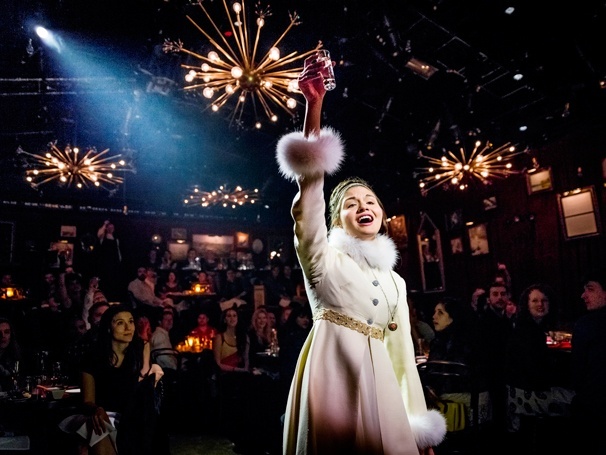
1) Natasha, Pierre, & the Great Comet of 1812


Oh how she blushes.  Amber Grey is just one of the many sensational things about Natasha, Pierre, & the Great Comet of 1812 Off-Broadway.

This Off-Broadway show came out of nowhere and completely blew my mind.  A self-described "electropop opera," this musicalization of a sliver of Leo Tolstoy's War and Peace is the single most astounding show of the year.  Musically, the through-composed score is a treasure trove of invention, fusing disparate elements like Russian folk music, electronica, and even art song into a cohesive whole that never ceases to surprise and amaze.  Given a knockout environmental staging by director Rachel Chavkin that makes use of every nook and cranny of the specially designed Kazino nightclub, Natasha, Pierre, & the Great Comet of 1812 is a swirling concoction of a musical unlike anything I've ever seen, performed by an outstanding ensemble of actors who are firing on all cylinders.  As Natasha, Julliard graduate Phillipa Soo is the find of the season, with a soaring voice and staggering emotional honesty that anchors the show and makes its grand themes feel immediate and accessible.  There are too many amazing actors to mention them all, but Amber Grey, Grace McLean, and Brittain Ashford make particularly strong impressions.

Let me say this in no uncertain terms: GO SEE THIS SHOW!!!  Anyone who has ever complained about the lack of innovation in modern musical theatre owes it to themselves and the art form to support this piece.  And let me know when you're going, because I will gladly join you!


And there you have it.  These are my personal picks for the best theatrical experiences of 2013.  If there are any you think I missed, please let me know, as I'm always looking for recommendations as to which show I should see next.  Here's hoping 2014 is an equally good year for inventive new works!

Saturday, December 21, 2013

The Best Shows of 2013: Part 1

Greetings, internet!  It's been a while.  I'm sorry I haven't been around (working a full-time job and taking a much needed vacation have kept me occupied for the past month), but I certainly wouldn't forget to post my annual list of the Best Shows of 2013!

For those who haven't seen one of my Best Of lists before, there are two very simple criteria for a show to make the list:  1) It must have opened and been seen by yours truly during the 2013 calendar year (so any show I haven't personally seen is automatically disqualified); and 2)  Said show must have been good.  I am happy to say that I saw much more good theatre than bad, and looking back I'm glad I've been taking baby steps towards seeing more Off-Broadway shows, as some of my most interesting nights at the theatre were spent in the tinier venues away from the hustle and bustle of the Great White Way.  This year, I am only writing a brief paragraph about each show rather than giving every entry it's own post, so without further ado here is the first half of my Best Shows of 2013 list!

10) Kinky Boots

The sex is in the heel:  Billy Porter is Broadway's reigning diva as Lola in Kinky Boots

From the moment it was announced, Kinky Boots always sounded like a fun night in the theatre.  Focusing on a struggling shoe factory that decides the road to financial stability lies in manufacturing women's shoes for men, this Cyndi Lauper-Harvey Fierstein-Jerry Mitchell collaboration is a perfectly lovely concoction.  The show is by no means groundbreaking (many of the same themes were addressed equally well in Fierstein's other drag musical, La Cage aux Folles), but there are some charming tunes, a stunning star turn by this year's Tony winner Billy Porter, and more glitter and sequins than you can shake a six-inch heel at.  I never would have predicted Kinky Boots' incredible box office performance, but there are certainly less deserving shows that have run much longer (*cough*Cats*cough*).

9) Vanya and Sonia and Masha and Spike

Surely it's obvious who Sigourney Weaver's self-absorbed Masha has dressed as (and David Hyde Pierce makes an adorably droll dwarf).

Christopher Durang finally won his first Tony Award for this farcical riff on unfulfilled desires and our youth obsessed culture.  Durang's comedy aims both high and low, equally at home with insider references to Anton Chekov and politically incorrect Hellen Keller jokes.  While Durang's script is good, the play's powerhouse cast is what pushed Vanya and Sonia into must-see territory.  Kristine Neilson and David Hyde Pierce both gave tour de force performances, each gifted with the kind of stand-out moments actors often dream about (Neilson's bittersweet second act phone call, Pierce's explosive rant against the younger generation).  The supporting cast was just as accomplished, and the show was one of the better examples of ensemble acting on the boards during the spring and summer.  Vanya and Sonia was the definition of laugh-out loud funny, and certainly earned its place among the year's best comedies.

8) Far From Heaven

It's autumn in Connecticut, but Kelli O'Hara's career as one of New York's best singing actresses is far from over.

Following the surprise success of Grey Gardens, composer Scott Frankel and lyricist Michael Korie once again tackled source material that seemed to defy musicalization.  This story of a 1950's suburban Connecticut housewife watching her picture-perfect life crumble around her and the small solace she finds in her relationship with her black gardener lives in the small moments, and musicals typically thrive on the big and flashy.  But Frankel and Korie once again proved what deft observers of the human condition they are, mining the story for all of its thematic richness and making it sing with some of the most beautiful music to grace the New York stage this season.  The pair also received a gift from the musical theatre gods in leading lady Kelli O'Hara, doing some of her most nuanced work to date.  I really hope this show finds its way to Broadway, as there is a distinct lack of serious musical theatre being written these days.  Until then we'll have to "make do" with O'Hara's next project, the Jason Robert Brown-scored Bridges of Madison County.

7) Big Fish

Norbert Leo Butz is certainly the "hero" of the fall musical season, giving an electric performance in the lead role of the unfairly underrated Big Fish

The critics were rather lukewarm to this Susan Stroman-directed tuner, and the box office has unfortunately followed suit, prompting the show to post a December 29th closing date.  It really is a shame, because Big Fish is one of the more interesting and complex projects to make it to Broadway in the past few seasons, and it's inherently theatrical premise (a travelling salesman prone to telling tall tales) has produced some of the fall's most stunning visuals.  Stroman is in top form with her inventive staging, which finds room for dancing elephants, a USO-inspired production number, and one of the few effective uses of slow motion in a live theatrical production.  The preternaturally talented Norbert Leo Butz is makes a strong case for Tony Award #3, with his decades-spanning characterization providing the show it's heart and soul.  He is ably matched by Kate Baldwin as his ever-faithful wife and Bobby Steggert as his estranged son.  If you haven't seen it yet, run out to catch Big Fish before it disappears forever at the end of the month.

6) A Gentleman's Guide to Love and Murder

Why are all the D'Ysquith's dying?  From laughter, I'd wager.

This stunning debut by unknowns Robert L. Freedman and Steven Lutvak is the fall's best reviewed new musical, and rightly so.  Smartly written and beautifully sung, there is enough wit and invention in Gentleman's Guide's two-and-a-half hours to fill several lesser musicals.  Although the ghoulish-sounding plot involves Monty Navarro systematically bumping off eight members of the wealthy D'Ysquith clan in order to inherit an earldom, this musical farce is one of the funniest, most entertaining shows of the new season.  Jefferson Mays strikes comedic goal as all eight of the doomed D'Ysquiths, and Bryce Pinkham is adorably understated as the well-meaning but murderous Monty.  But the cast's real finds are Lisa O'Hare and Lauren Worsham, the two golden voiced women making their Broadway debuts.  Watching the pair fight for Monty's affections is positively thrilling, and the trio's Act II showstopper "I've Decided to Marry You" is as close to musical comedy heaven as you're likely to find this season.


That's the first half of my list.  Come back soon for my Top 5 of 2013, and also keep an eye out for my companion (and much snarkier) piece, the Worst Shows of 2013.

Monday, November 25, 2013

It's A Complicated Russian Novel, Given a Top-Notch Adaptation


Review:  Natasha, Pierre, & the Great Comet of 1812

 
Phillipa Soo makes a stunning Off-Broadway debut as the title character in Natasha, Pierre, & the Great Comet of 1812.  Please let this be the start of many more star turns to come.

Every so often a show comes along that is so thrillingly original that it’s difficult to describe in words.  Natasha, Pierre, & the Great Comet of 1812 is just such a show, an incredible work of art so unlike what has come before that it must be experienced firsthand to be truly comprehended.  A seamless fusion of disparate and unexpected elements like Russian folk music, electronica, and 19th century literature that draws equally from the worlds of musical theatre and traditional opera, Natasha is a rollicking good time in the theatre and easily the best new musical of the year. 

The story is adapted from a portion of Leo Tolstoy’s famous Russian epic War and Peace, but don’t for a second let that fact fool you into thinking Natasha is some stuffy, overly romantic period musical.  This self-described “electro-pop opera” makes the source material feel fresh, vibrant, and immediately accessible, distilling the passions and politics of the Russian aristocracy into something relatable to modern audiences without losing an ounce of the setting’s otherworldly appeal.  The plot follows the young and beautiful Natasha, who is madly in love with her fiancé Prince Andrey and goes to live with her godmother in Moscow while anxiously awaiting his return from fighting in the Napoleonic Wars.  During Andrey’s absence she meets and is eventually seduced by the indescribably handsome but morally questionable Anatole, whose brother-in-law Pierre serves as the evening’s narrator.

Through-composed with music and lyrics by Dave Malloy (who also provided the libretto), Natasha features an incredibly complex score that strikes the perfect balance between being immediately tuneful and offering nuanced layers that require repeated listening to fully appreciate.  Staying away from the more traditionally structured songs typically associated with musicals, Natasha’s score is heavily influenced by the operatic model of melodically inventive recitative interspersed with more rigidly formatted arias.  Malloy creates sonically distinct and vibrant worlds for each of the show’s varied settings, from the rapturously beautiful cacophony of the opera to the thumping bass of Moscow’s clubs.  The blending of such anachronistic and diametrically opposed genres only adds to the show’s unique identity, and never once does a musical choice feel inappropriate or ill advised.  Melodic motifs are subtly reused and reconfigured throughout, making the show sound familiar and yet fresh for the entirety of its runtime.

Malloy has written some truly stunning solos, like Natasha’s soaring “No One Else” or her cousin Sonya’s plaintive “Sonya Alone.”  Yet his true genius reveals itself in the more complex duets and ensemble numbers, which are filled to the bursting point with tight harmonies and elaborate choral writing.  The multi-talented Malloy has also orchestrated his own work to perfection, adding another dimension to the music as the instruments and vocals intertwine in deliciously unexpected ways.  But as beautiful and accomplished as Malloy’s score is, it is always in service of the characters and the story, and it keeps the show moving at a near-breathless pace.

Once the show starts, it doesn’t stop, and even the more introspective moments carry with them a thrilling forward momentum.  Malloy’s score lays the basis for this, but it is amplified and enhanced by Rachel Chavkin’s stunning direction.  Chavkin has gifted the show with an immersive staging that truly makes the audience feel like they are a part of the action, which occurs all around them in a specially designed venue called Kazino created explicitly to house the show.  The actors enter and exit from all sides, often speaking directly to the audience and occasionally roping a spectator or two into the action.  Chavkin’s artful deployment of her actors utilizes the space to its fullest while at the same time maintaining a laser-like focus; you always know exactly where you should look, but there is plenty to hold your attention should you choose to glance elsewhere.

Further enhancing the show’s crystal clear storytelling is the unbelievable lighting design by Bradley King.  King achieves a dizzying number of looks and washes over the course of the evening, highlighting and enhancing the action at every turn.  With just a couple of lights and some colored gels King transports us to a snow-covered Moscow street at night or an elaborate costumed ball in a palatial manor.  King’s work is essential in creating some of the evening’s most striking images, including a final tableau that beautifully abstracts the titular Comet of 1812.  It is a virtuosic piece of design work that stands among the very best lighting designs I’ve ever encountered.

And after all of this praise, I haven’t even touched upon the extraordinarily gifted cast who brings this tale to life.  The story is anchored, from beginning to end, by Julliard graduate Phillipa Soo’s stunning portrayal of Natasha.  Soo embodies Natasha’s youth and charisma while utilizing a staggering emotional honesty and accessibility that makes you feel every step of her journey from childhood innocence into full-grown womanhood.  Soo sings likes a dream and has a remarkable amount of control over her voice, but it is her acting that truly captures the audience and makes Natasha’s story involving, relatable, and ultimately heartbreaking.  Soo is a star in the making, and one can only hope that Natasha is the beginning of a long and illustrious career for the young beauty.

David Abeles is by necessity more restrained as Pierre, a cuckolded husband and academic who spends a majority of the first act on the story’s periphery.  He possesses an everyman quality that makes him feel approachable, and his expressive face and voice allows him to communicate the multitude of emotions roiling beneath Pierre’s stoic surface.  As his adulterous wife Helene, Amber Gray is an unbridled firebrand whose killer, blues-influenced voice is put to particularly good use during the song “Charming.”  And Grace McLean is outstanding as Marya D, Natasha godmother and the grande dame of the Moscow aristocracy.  A welcome bit of comic relief for most of the show, McLean comes into her own during the impassioned one-two punch of “In My House” and “A Call to Pierre” late in the second act.

The only cast member who isn’t quite all you’d hope is Lucas Steele as Anatole.  Undeniably handsome and possessing an impressive tenor, Steele can be hard to understand when singing in his middle register and lacks the emotional believability of his costars.  He has the character’s preening physicality down pat, but doesn’t quite have the chemistry to truly sell Anatole’s wholesale seduction of the innocent Natasha.

That is literally the only negative thing I have to say about the production (and Steele is by no means awful); everything else is top notch.  Dave Malloy has written a truly revolutionary score that deserves to be heard often and repeatedly, and may well prove to be an inspiration to an entire generation of future musical theatre composers.  Rachel Chavkin has directed the piece with precision and sensitivity, in an immersive environmental staging that is a shining example of how such productions should be done.  The refreshingly multi-ethnic cast is a top-notch group of singing actors, and Phillipa Soo in particular establishes herself as an actress to watch.  Natasha, Pierre, & the Great Comet of 1812 is playing a limited engagement through January 5th, so get your tickets now or miss out on the most exciting new musical of the year.

UPDATE:  The show has recently been extended to February 2nd, so you still have time to catch this gem!  I'm already planning my (3rd) trip to this astonishing production.

Sunday, November 17, 2013

A Gentleman's Guide to a Jolly Good Time

Review:  A Gentleman's Guide to Love and Murder

Murder, you say? - Jefferson Mays is absolutely killing it as the eight doomed D'Ysquiths in A Gentleman's Guide to Love and Murder.


A Gentleman's Guide to Love and Murder, the delightful new musical comedy that just opened at the Walter Kerr Theatre, is the complete antithesis of everything that has come to define the contemporary Broadway musical, and is all the better for it. Smart, funny, and deliciously tongue-in-cheek, this gem of a show offers a refreshing change of pace from the bombast currently in vogue on the Great White Way, a thinking man's comedy by a couple of Broadway newcomers that is the most entertaining book musical of the fall season.  Even those who generally think themselves too highbrow for shows where the characters break into song are likely to find themselves won over by this Gentleman's many charms.

Set in Edwardian England, A Gentleman's Guide is built from a simple premise that yields increasingly surprising dividends.  Upon his mother's death, young Monty Navarro learns that he is ninth in line to the D'Ysquith (pronounced "DIE-sqwith") family fortune, and takes it upon himself to bump off the eight self-involved nobles standing between him and his inheritance.  He hopes his increased social stature will help win over his longtime love Sibella Hallward, but along the way falls for his beautiful and pure-hearted cousin Phoebe.  And in an ingenious twist, all eight of the D'Ysquith nobles (including two lovely ladies) are portrayed by Tony-winner Jefferson Mays in a bravura performance that is sure to put the versatile actor in contention for a second statuette.  What follows is an evening of unadulterated musical comedy bliss, expertly performed by a sensational cast with some of the most beautiful voices currently on Broadway.

The score by Steven Lutvak and Robert L. Freedman is initially unassuming - the opening number is probably the worst song in the bunch, which is a shame - but quickly grows into a glorious classically-tinged score that has moments of rapturous beauty.  Lutvak and Freedman display a particular gift for counterpoint in the production's many duets, and their ability to write extended musical scenes culminates in the breathtakingly accomplished Act II trio "I've Decided to Marry You," sung by Monty and his two love interests.  The show also contains several dynamite patter songs which show off the duo's sharp and intricate lyrics, which for once are actually audible instead of being drowned out by an over-amplified sound system like in so many other shows.  The score has been masterfully orchestrated by the legendary Jonathan Tunick, who works under the charmingly novel idea that perhaps the orchestra should support the voice rather than compete with it.

Freedman's book keeps the show moving along at a steady clip, quickly establishing the various members of the D'Ysquith clan and just as quickly dispatching with them.  Despite the amount of plot he must cover, Freedman still manages to draw full and complex portraits of the three romantic leads, and the supporting characters have just enough flair to keep them easily distinguishable from one another.  The ending is probably too convoluted for its own good, but just as in the musical comedies of yore the destination isn't really the focus here.  A Gentleman's Guide is all about the journey, and it is a thoroughly entertaining one.

The cast is uniformly fantastic, starting with Jefferson Mays as the eight doomed members of the D'Ysquith family.  The mercurial Mays switches among his various personas with ease, granting each one a different set of quirks and mannerisms that make them instantly recognizable (Mays is greatly aided by Linda Cho's distinctive and gorgeous costumes).  More importantly, Mays makes all of them laugh-out-loud funny, striking a perfect balance between high and low comedy that is essential in establishing the evening's tone.  Mays is particularly memorable as the foppish Henry, who sings a hilarious duet with Monty entitled "Better with a Man," and the Tony-winner also scores as the delightfully self-involved Lady Hyacinth, who spends an entire musical number debating which starving, third world children are most worthy of her charity.

As the affably murderous Monty Navarro, Bryce Pinkham is perhaps the production's greatest discovery.  His Monty is sweet, unassuming, and undeniably British, feeling authentic and believable throughout the proceedings.  Pinkham anchors the entire show with a charming everyman quality that causes you to root for him even though he is essentially an unrepentant serial killer, and the young actor has the ability to suggest a whole host of emotions roiling just below the surface while maintaining his proper British poise (a dichotomy that is wonderfully exploited during the song "Stop! Wait! What!?!").  Pinkham also sings beautifully, with an effortless tenor that is one of the purest male voices to grace Broadway in a good long while. 

He is matched, note for note and scene for scene, by his two spectacular leading ladies.  Lisa O'Hare is ravishing as Monty's first love Sibella, making the character's nonstop rambling and concern with outward appearances endearing rather than off-putting.  O'Hare also flawlessly navigates Sibella's increasing jadedness without ever losing sight of the traits that made Monty (and the audience) fall in love with her in the first place.  Lauren Worsham is just as delightful as the eternally optimistic Phoebe D'Ysquith, radiating a winsome star quality that makes her an equally appealing match for the lovelorn Monty.  Both women are making positively smashing Broadway debuts, and when they sing together or with Pinkman (as in the aforementioned "I've Decided to Marry You") the actresses sound heavenly.

Director Darko Tresnjak deserves full credit for casting such fantastic actors and coaxing such winning performances out of them, although his staging for the show falls a bit short of the high benchmark set by the performers.  Tresnjak nails the tone and keeps the show moving, but his stage pictures are rarely very interesting to look at.  He is partially hampered by Alexander Dodge's set, which in attempting to replicate the feel of an English music hall has effectively halved the amount of available playing space for most scenes.  There's definitely more to the scenic design than initially apparent, although the scattered surprises don't really justify the concessions made in the area of actor mobility.

In the end, A Gentleman's Guide's strengths far outweigh its weaknesses, and the show proves itself one of the most unexpected delights of the fall season.  A refreshing change of pace from the loud, pop-influenced excess of most modern-day musicals, the show marks the auspicious Broadway debuts of both the writing team and a good portion of the highly talented cast.  It is a rare show that manages to be this entertaining while remaining intellectually stimulating, and it would be absolutely scandalous for any true theatre lover to miss it.  A killer good time is practically guaranteed (sorry, I had to).

Thursday, November 14, 2013

A Musical Comedy Stuck in 2nd Gear

Review:  Little Miss Sunshine

Stephanie J. Block, Rory O'Malley, and Will Swenson prove why they're all Tony-nominated actors as they struggle mightily to overcome Little Miss Sunshine's shortcomings.


Perhaps it's fitting that Little Miss Sunshine, the latest collaboration between director/librettist James Lapine and composer William Finn, fails to live up to expectations.  The new tuner, just like the 2006 independent film on which it is based, examines how a dysfunctional family deals with the dashed expectations of their rather run-of-the-mill lives.  And just like in real life, it is borderline painful to watch hard-working and talented people (in this case, the mostly excellent cast) struggle to overcome the bad hand they've been dealt, which here takes the form of a poorly constructed and tonally confused one-act musical.  Not since 2010's deeply flawed Women on the Verge of a Nervous Breakdown has a show sounded so good on paper and so thoroughly failed to deliver on stage.

Like it's filmic counterpart, Little Miss Sunshine tells the story of the unassuming Hoover clan and their cross-country road trip to get 9-year-old Olive (Hannah Nordberg) to the titular beauty pageant.  Family matriarch Sheryl (Stephanie J. Block) works long hours to support her family since her husband Richard (Will Swenson) was laid off of his job.  Richard is hoping to sell the publishing rights to his self-help blog, much to the derision of his foul-mouthed, lascivious father, known only as Grandpa (David Rasche).  Meanwhile Sheryl and Richard's son Dwayne (Logan Rowland) has taken a vow of silence until he achieves his goal of joining the Air Force, and Sheryl's suicidal gay brother Frank (Rory O'Malley) is staying with the family while he recovers from his latest "episode."  When the family finds out that little Olive has been chosen as a last minute contestant, they all pile into the family's VW bus in hopes of making it to the pageant on time.

The source material presents several challenges, none of which are successfully addressed by the creative team.  With the exception of Olive, the family members all seem to barely tolerate one another, giving off the impression they'd rather be anywhere but stuck in a van together.  Yes, the narrative is designed to show these people come to realize how much they love each other, but without even a glimmer of kindness or affection to begin with the first half of the show is a rather miserable experience.  There are hints of interesting and dynamic pairings during the opening scenes, and the show would be better served by expounding on these so there was at least some joy in the opening segments.  For instance, Grandpa may have total disdain for the rest of the Hoover clan, but playing up his affection for Olive would have gone a long way towards making him more bearable (he's easily the show's most insufferable character).  There is an odd bond caused by the shared existentialism of Frank and Dwayne that would be great to see explored further and sooner.  If each character seemed to like at least one other person at the musical's outset, then there would be something to help offset the snarkiness and general misery of what is advertised as a musical "comedy."

Even more devastating is the writing team's inability to settle on a workable tone.  There is a lot of drama and angst on display, but it isn't presented or examined in enough detail for the show to effectively work as serious character piece.  Yet there is enough heavy subject matter - including undertones of marital strife, the burdens of unemployment, and the disappointment of unrealized ambition - that the attempts at comedy never really take off.  The razor sharp wit and gonzo sense of humor so apparent in Lapine's libretto for the duo's last collaboration, The 25th Annual Putnam County Spelling Bee, is inexplicably absent for much of the show.  The scenes set during the "Little Miss Sunshine" pageant have this self-aware cheekiness in spades, and are so effective that it makes you retroactively wish the entire production was an equally over-the-top farce. 

Finn's score is easily the least memorable aspect of the show, which is especially disappointing given the composer's sterling work elsewhere.  There are some fine bits of ensemble music scattered throughout, but these sections are few and far between and unfortunately bookended by fairly clunky solo numbers.  Even worse, almost none of the songs have a clear purpose, lessening their dramatic impact.  There is an extended sequence where Frank encounters the man who prompted his suicide attempt, and though Frank claims to have moved on he continually sings about the other man's physical beauty.  Rather than coming across as a believably mixed set of emotions, the song makes Frank seem bipolar and lacks any kind of internal logic.  There is a flashback to before Sheryl and Richard got married that appears designed to show the love they once felt for each other, but consists of the characters being incredibly ambivalent toward one another until suddenly they aren't.  What are intended to be revealing character moments come across as muddy and confused instead, and leave the audience even more confused about who these people truly are.

The cast struggles mightily to rise above the writing's shortcomings, and do a good enough job that you can't help but wish they had better material to work with.  Stephanie J. Block shows a subtleness and range she hasn't often been asked to use, while still finding moments to show off her comedic chops (if only the score allowed her a better showcase for that phenomenal voice).  Rory O'Malley does some of his most affecting work yet as the deeply troubled Frank, and sounds fantastic on his two main duets.  Richard's straight-laced nature robs Will Swenson of the chance to use the utter fearlessness that made him so beguiling in Hair, but it's nice to see such a talented actor push himself in new directions.  Young Hannah Nordberg is cute as a button as Olive, and Logan Rowland conveys plenty of character despite remaining mute for over half of the show.  There are also two scene-stealing turns by Jennifer Sanchez as Linda the "Bereavement Consoler" and as the reigning Miss California, which point to the show that could have been had the authors chosen to fully embrace the quirkiness that turned Spelling Bee into a surprise hit.  The only actor who fails to make much of an impression is David Rasche as Grandpa, who is saddled with the worse material of the bunch and does little to disguise its shortcomings.

Lapine the director comes across better than Lapine the librettist, managing to keep the staging fresh and interesting despite the fact that over half the action takes place in the confines of an old VW bus.  He somehow manages to make actors running in place and miming the pushing of a van exciting, and knows just how to use Beowulf Boritt's deceptively simple set to maximum effect.  There are also fun touches by costumer Jennifer Capiro (who thankfully gets to costume both a swimsuit and eveningwear competition for the 9-year-old pageant girls) and lighting designer Ken Billington.

But ultimately, all of the talent in the world cannot save bad writing, and unfortunately Little Miss Sunshine features some very bad writing by people who should really know better.  Lapine and Finn have been responsible for some of the most innovative small-scale musicals of the past 20 years, not to mention Lapine's incredible collaborations with musical theatre genius Stephen Sondheim.  How Lapine and Finn managed to drop the ball so completely remains a mystery, and unfortunately their talented cast and crew are left to pick up the pieces.  Even diehard musical theatre fans can find a better use of their time this fall, given the wealth of innovative and inventive new musicals both on Broadway and Off.