Monday, August 12, 2013

A Triumphant Return for Broadway's Greatest Funnyman


Review:  The Nance
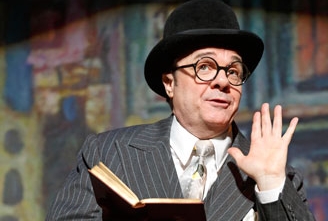
Nathan Lane commands the stage in his latest tour de force performance, as the title character in Douglas Carter Beane's The Nance.
 
After several forays into the world of musical theatre bookwriting, Douglas Carter Beane returns to his roots as a serio-comedic playwright with The Nance, his latest Broadway venture that is recently finished up its run at the Lyceum Theatre (and will be recorded for broadcast on PBS).  And while the play is certainly a more accomplished work than any of his musical outings, it remains a frustratingly conflicted piece that attempts a variety of things without fully succeeding at any of them.  The play wants to be a probing character study but fails to really explore the motivations of its protagonist.  It wants to make an admittedly topical political statement but ends up feeling preachy and pedantic rather than relevant and illuminating.  It wants to be both a serious drama and a low-brow comedy, but rather than complimenting one another each of these disparate elements continually undercuts the effectiveness of the other.

But at the play’s center is a Herculean performance so electric, so accomplished in its specificity and authenticity that it almost succeeds in elevating the play to the lofty realms which it so obviously aspires to.  Nathan Lane’s work as protagonist Chauncey Mills is nothing short of extraordinary, reasserting his status as one of the most accomplished stage actors of his generation.  With no disrespect meant to his very talented costars, Lane acts circles around everyone else onstage, and actually manages to make the play’s disparate tones seem organic and even necessary. 

The plot centers on Lane’s Chauncey Mills character, a man who has made a name for himself doing burlesque skits in Depression Era New York City.  Mills’ signature role is that of the overtly effeminate stock character dubbed “The Nance,” a professional choice made infinitely more complex by the fact that Mills is himself gay.  After years of anonymous sex with strangers, Mills seduces a young man named Ned who is just coming to grips with his own sexuality, and to the surprise of both men they find themselves entering a long-term relationship together.  Meanwhile, Mills’ burlesque theatre and his act in particular are coming under increasing pressure from city officials taking a stance against indecency, forcing the outspoken Mills to make a choice between being himself and suppressing his true nature to fit in.

It cannot be overstated how brilliant Nathan Lane is in the central role. From the opening moments of the show until the final curtain, Lane dominates the stage and exhibits such mastery of his craft that even his accomplished costars look like amateurs in comparison.  The play gives him ample opportunity to demonstrate his dramatic chops, while simultaneously providing him with an unending string of zingers and comic bits that utilize his unparalleled sense of comedic timing.  Throughout the play we are treated to excerpts from Mills’ stage act, and Lane absolutely kills in these scenes of perfectly reconstructed vaudeville comedy.  Where a normal actor would earn one laugh Lane manages to get three, often by using little more than a cock of the eyebrow or a sideways glance at the audience.  More miraculous still is Lane’s ability to make such carefully calculated choices feel utterly spontaneous, leaving the audience with the impression that this virtuosic performance is being created from scratch each night.

And while none of his costars are operating on Lane’s level (there are few actors in the world that could match such inspired lunacy), the rest of the cast turns in fine performances in their own right.  In his Broadway debut, Jonny Orsini charts a beautifully realized journey of self-acceptance as Mills’ lover Ned, and watching him realize that his sexuality doesn’t automatically prevent him from enjoying the perks of a domesticated life is particularly poignant in this time when marriage equality is on the forefront of the national debate.  If there is one criticism of Orsini’s performance it’s that he plays the character rather dumb, which at times comes into direct conflict with the highly literate dialogue playwright Beane has provided all of the characters.

Lewis J. Stadlen plays the lovably gruff Efram with aplomb, and makes an excellent foil for Lane during the burlesque skits that are the show’s highlight.  In a lesser actor’s hands Efram’s discomfort with Mills’ sexuality would make him the clear villain of the piece, but Stadlen tempers his performance with enough begrudging respect to make it clear that Efram isn’t a bad person.  As the trio of burlesque dancers that work at the same theatre, Cady Huffman, Jenni Barber and Andrea Burns make for excellent support, although the writing doesn’t do enough to differentiate their three characters.  Huffman (reunited with Lane after they both won Tonys for The Producers a decade ago) makes the strongest impression, although she is unfortunately saddled with the most overtly political and unnecessarily knowing dialogue.

Director Jack O’Brien keeps the evening moving at a steady pace, and during the show’s final twenty minutes manages to synthesize the disparate bits and repeating motifs into something resembling resonance.  He is aided immensely by John Lee Beaty’s marvel of a rotating set, which allows for virtually seamless transitions from one locale to the next.  Ann Roth clearly had a ball with the period costumes, and her designs for the burlesque outfits in particular possess just the right amount of winking outlandishness.  The lights and sound by Japhy Weideman and Leon Rothenberg get the job done but aren’t particularly memorable, and the original music by Glen Kelly is a nice if unassuming addition to the proceedings.

Ultimately, The Nance’s primary reason for being is to provide Nathan Lane with a showcase for his immense talents, and in that respect it succeeds wholeheartedly.  The comedic genius’ work manages to elevate Douglas Carter Beane’s passable script into something approaching greatness, and everyone involved has graciously taken a backseat while letting the master work his magic.  It is a worthwhile evening for those who are interested, although I do hope that Lane’s next Broadway outing is in a vehicle more worthy of his extraordinary gifts.

Monday, June 24, 2013

Close Enough to Heaven, Despite a Few Flaws


Review:  Far From Heaven
Kelli O'Hara has found her greatest role yet as a conflicted Connecticut housewife in Far From Heaven.  Note to producers:  Transfer please!!!
 
Every few seasons, a show comes along that boldly attempts to push the boundaries of what the American musical can be.  Challenging preconceived notions about form and content, these works compensate for any flaws through sheer ambition and invention, eschewing the song-and-dance routines of traditional musicals in favor of something more high-minded and weighty.  Far From Heaven, the new Scott Frankel/Michael Korie tuner currently playing a sold-out engagement at Off-Broadway’s Playwrights Horizons, is not a perfect show, but it is an endlessly fascinating examination of repressed feelings and forbidden love that is one final polish away from being a landmark musical event.

Based on the Oscar-nominated 2002 film of the same name, Far From Heaven tells the story of quintessential 1950s housewife Cathy Whitaker and the slow but inevitable collapse of her entire world.  The queen bee of Hartford, Connecticut, Cathy’s seemingly perfect life begins to unravel when she discovers that her husband has long struggled with a repressed attraction to other men.  At the same time, Cathy finds herself developing feelings for her kindly and unassuming black gardener in a time when such a relationship isn’t just uncommon but almost unthinkable.  Despite the seismic shifts occurring in her perfectly ordered world, Cathy struggles to keep up appearances and make sense of her ever-changing situation.

Like Frankel and Korie’s previous collaboration, the decades-spanning character study Grey Gardens, Far From Heaven is much more concerned with the subtle nuances of its characters’ emotions than with overblown shouting matches and volatile emotional breakdowns.  Initially this gives the evening a feeling of detached flatness, but as the show progresses and the layers are peeled away this separation morphs into an emotional realism that becomes the show’s greatest asset.  Despite being heavily musicalized and underscored, Heaven presents a wholly naturalistic world filled with characters as complex and conflicted as any real person, with a soul-stirringly beautiful score that far surpasses the pair’s already accomplished work on the aforementioned Gardens.  The songwriters’ use of character-specific themes and recurring motifs enriches the storytelling and provides subtle auditory clues about the characters’ emotional lives, and the music manages to be incredibly varied while simultaneously feeling entirely of one piece.  It is a dazzling display of musical mastery, sung to near-perfection by the supremely talented cast.

Anchoring the show with what is arguably the performance of her illustrious career, four-time Tony-nominee Kelli O’Hara is simply sublime as the vulnerable and slightly naïve Cathy.  O’Hara’s crystalline voice is so superb that you almost take it for granted, but in addition to her gorgeous tone the actress imbues ever note with a startling amount of emotional depth and intensity.  Her Cathy is definitely a product of her time, lacking the spine and inner resolve we’ve become accustomed to seeing in modern musical heroines, but rather than seeming weak this makes her all the more compelling.  She doesn’t have the strength to tell off her antagonists in a triumphant public spectacle, but like many real women she quietly soldiers on in the face of adversity while only allowing herself a few stolen moments to really come to terms with her grief.  Rather than being an idealized version of us, Cathy is us, with all the attendant foibles and momentary lapses in judgment, which simultaneously makes her more relatable and helps bridge the vast gap between her conservative mid-century reality and our own.

As her husband Frank, Steven Pasquale brings a rich baritone and deeply conflicted emotions to his role as a closeted homosexual.  The show is understanding of Frank without excusing him from his mistakes, including his continual lying about his whereabouts and the emotional abuse he occasionally hurls at Cathy.  The character could use a tad more development in the writing, but Pasquale makes the most of what he is given, and is a welcome presence whenever he’s onstage.  Pasquale makes you understand why Cathy would want to try and salvage such a deeply broken relationship, and as her gardener Raymond Deagan the entrancing Isaiah Johnson makes it just as easy to understand why she would be drawn to someone society deems unworthy of her love.  Johnson’s chemistry with O’Hara is palpable, and the pair beautifully charts the development of Cathy and Raymond’s relationship from that of friends to the deeper but largely unexpressed love that overtakes them.  There is a quiet sincerity about their interactions that is all-too-rare on the musical stage, and their final scene together is one of the show’s most heartbreaking.

The supporting cast is equally impressive, especially Nancy Anderson as Cathy’s best friend and confidante Eleanor Fine.  O’Hara and Anderson have a wonderfully believable friendship, and their voices sound particularly lovely when singing together.  Quincy Tyler Bernstine elevates her role as the Whitakers’ maid above that of archetype, displaying a fondness for Cathy and her children while maintaining a period-appropriate amount of emotional distance from them.  The only thing resembling a weak link in the cast is James Moye as Frank’s work buddy Stan, although the problem lies as much in the writing of the character as it does with Mr. Moye’s performance.

Director Michael Greif does a fine job with the show, although the admittedly challenging work does present the accomplished helmer with a few stumbling blocks.  Greif makes excellent use of the smallish Playwrights Horizons stage (aided immensely by Allen Moyer’s incredibly versatile and inventive set), but doesn’t quite nail the show’s delicate tone.  The acting is so subtle that it sometimes fails to read onstage, and yet Greif can be forgiven for not wanting to go too big with the characters’ emotions, as such a decision would destroy the nuance that makes the work so fascinating.  Greif has done an excellent job of providing the sideways glances and stern looks that help communicate just how scandalous Cathy and Raymond’s interracial friendship is to a modern audience, but much of that work is obscured by Kenneth Posner’s overly dark lighting design.  Thankfully the stage is still bright enough to see the period-perfect costumes by Catherine Zuber, whose work helps to fully transport the audience from 2013 New York to 1957 Connecticut.

Overall, any flaws in Far From Heaven (including bookwriter Richard Greenberg’s sometimes bland libretto) are vastly outweighed by its positives.  The show is one of the more complex relationship dramas to be musicalized, and the score by Frankel and Korie is positively enthralling.  The show has also gifted one of this generation’s greatest singing actresses with one of her greatest roles, and the show deserves a future life based on the strength of O’Hara’s performance alone.  Since no transfer has been announced and O’Hara’s impending pregnancy preclude the chances of the show being remounted anytime soon, any interested parties should definitely head over to Playwrights Horizons to catch this fascinating new musical before it ends its limited run July 7th.  It’s much closer to musical theatre heaven than most shows ever get.

Sunday, June 9, 2013

2013 Tony Predictions: Best Play and Musical


It’s finally here!  Broadway’s big night is upon us, and I’ve saved the two biggest categories for last.  The Best Play and Best Musical awards not only represent the highest possible achievement in American theatre, but they also guarantee a new work a place in the history books forever more.  Winning either of these awards not only increases the Broadway mounting’s chances of turning a profit, but greatly increases the amount of money a show can make from subsequent tours and regional mountings. 


Of course, such a prestigious award always comes with its fair share of controversy.  There are some that feel the Tony Awards have a habit of honoring commercial viability over artistic excellence, and there are plenty of fantastic, enduring works of theatre that went home empty handed on Tony night (Ragtime and West Side Story come to mind).  But the awards still mean something, and more often than not the shows honored are excellent artistic achievements even if they aren’t necessarily the *most* deserving.  So which shows will be the big winners tonight?  Read on to find out.

 
Best Play

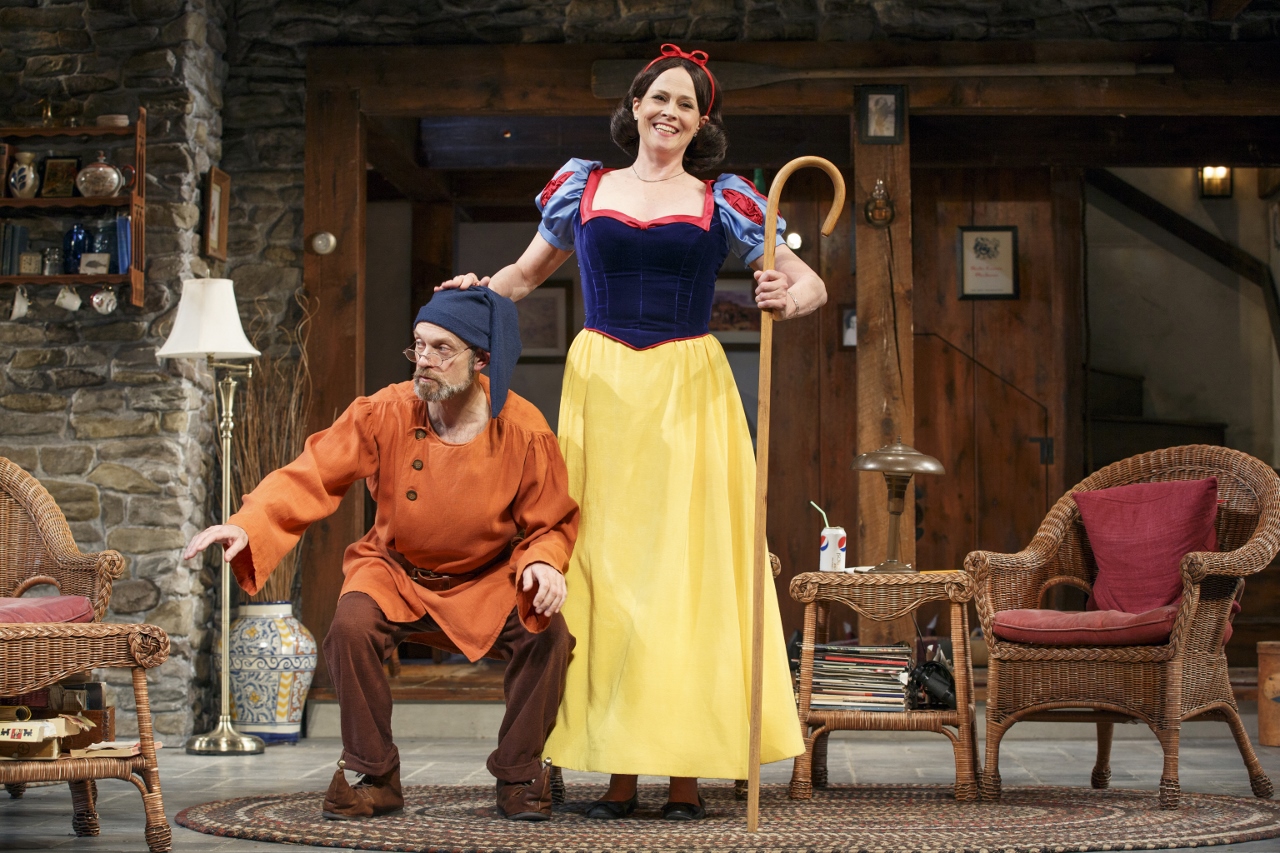
Only Christopher Durang would find a way to connect Chekhov and Snow White.  That's gotta be worth some kind of award right there.
 

Nominees:  The Assembled Parties; Lucky Guy; The Testament of Mary; Vanya and Sonia and Masha and Spike

 
An interesting and eclectic assortment of shows, this year’s Best Play race isn’t as chock-full of the high-minded (and oftentimes stuffy) dramas that Tony voters usually fawn over.  The biggest surprise in this category is probably the inclusion of the Fiona Shaw-led The Testament of Mary, a show that posted its closing notice the same day as the announcement.  I can’t imagine it winning, but as they say, it’s an honor just to be nominated.

Heading into the awards season, I thought The Assembled Parties would be a much stronger contender than it’s turned out to be.  Mounted by highly respected Manhattan Theatre Club, the show was roundly praised by critics for its nuanced writing and all-around excellent performances.  But with only three Tony nominations to its name, the show is definitely this year’s dark horse; it *could* win, but the chances of that actually happening are miniscule.

This is really a two-way race between Lucky Guy and Vanya and Sonia and Masha and Spike.  The final work written by the beloved Nora Ephron before her death, Lucky Guy is one of the biggest commercial successes of the season, and features bona fide movie star Tom Hanks in his Broadway debut.  But for all of the kind words written about Lucky Guy, I get the sense that most people know it is not a great play, and are cutting it some slack due to their nostalgia for its departed author.  Meanwhile, Vanya and Sonia has been racking up the wins in this season’s other awards races, and despite a prolific career playwright Christopher Durang has never actually won a Tony.  I think this is the year that changes, and it will mark the first time an outright comedy has won the Best Play trophy since Lost in Yonkers won back in 1991.

Should Win:  The Assembled Parties
Will Win:  Vanya and Sonia and Masha and Spike

 
Best Musical

Kinky Boots leads this year's Tony nominations and is one of the frontrunners for the big award, because really, how can you go wrong with drag queens?
 
Nominees:  Bring It On: The Musical; A Christmas Story; Kinky Boots; Matilda the Musical

 
I was as surprised as anyone to see Bring It On and A Christmas Story nominated in this category, but it represents the rare instance where my surprise stems from the fact that the nomination committee and I completely agree.  The four nominated shows this year are the season’s four best new musicals, and I applaud the committee for nominating two shows that could have easily been dismissed due to their limited-run nature (a rarity for new musicals).  However, it must also be said that both shows fall into the category of “it’s an honor just to be nominated,” because this is clearly a race between Kinky Boots and Matilda.

Matilda is the quintessential British import; after an acclaimed run in the London, the production has transferred to New York to similarly rapturous reviews, and seems as concerned with impressing the audience through its sheer theatricality as it is with telling a compelling story.  Meanwhile Kinky Boots is a wholly American creation (albeit one based on a British film) whose primary concern is entertaining the audience through song and dance.  The show avoids being complete fluff by having a message about acceptance of yourself and others, although it is a point made by many, many shows before it and hardly registers due to all the glitz and glamor.

These shows are so neck and neck that even industry veterans aren’t sure which way things will go, but my heart is telling me that Kinky Boots will emerge victorious.  The show is extremely easy to like, and while it breaks little new ground the tuner is extremely well-crafted on all fronts.  The emphasis on more accessible nominees in all the categories this year tells me that the Tony voters are in the mood for something a bit more fun, and I honestly think the theatrical community as a whole has overdosed on British theatre in the past few seasons.  I personally found Kinky Boots to be the most compelling and successful of this year’s new musicals, and think its win will be well deserved.  But I also don’t rule out Matilda, and it will be extremely interesting to see how things turn out this evening.

Will & Should Win:  Kinky Boots
 

And that’s a wrap!  We’ve reached the end of another Tony season, and I have again written exhaustively about my thoughts on all things Broadway.  I hope you’ve enjoyed the coverage, and I thank everyone who has been so supportive of my little hobby.  As you wait for the big show later tonight, feel free to look back on all of my other predictions and Tony-related coverage below.

 
Best Revival
Best Actor
Best Actress
Best Featured Actor
Best Featured Actress
Best Book and Score
Best Direction and Choreography
2013 Tony Nomination React
2013 Tony Roundtable Podcast

Saturday, June 8, 2013

2013 Tony Predictions: Best Revival


All of Broadway is brimming with anticipation for the big Tony Award ceremony on Sunday, and here at Broadway, Etc. there are only four more races to predict.  The production awards are perhaps the most prestigious of them all, as they acknowledge the work of everyone involved rather than particular individuals, indicating that the entire work is of the highest artistic merit.  These are the awards that are also most likely to affect a show’s bottom line, with a Best Musical win in particular proven to majorly increase a show’s box office.  Today we’ll be looking at this season’s nominated revivals and predicting which shows will walk away the big winners.

 
Best Revival of a Play

Tracy Letts and Amy Morton in the acclaimed 50th anniversary production of Who's Afraid of Virginia Woolf?
 
Nominees:  Golden Boy, Orphans, The Trip to Bountiful, Who’s Afraid of Virginia Woolf?

 
To me, the most deserving production in this category is obvious.  The latest Broadway mounting of Who’s Afraid of Virginia Woolf? was not just this season’s best play revival, but the season’s best theatre period.  Under director Pam MacKinnon, the four person cast found an enormous amount of humor and emotional depth in the oft-produced American classic, making it feel as relevant and timely today as it did when it premiered fifty years ago.  Every aspect of the production was of the utmost quality, and despite all of the shows that have opened since it remains one of the most vivid and affecting nights I’ve had on Broadway all year.  Any other show winning would feel like blasphemy.

That said, I felt similarly about last season’s revival of Follies, and it was beaten by the upstart Porgy and Bess (which was admittedly very well-done).  I could envision a similar coup happening with Roundabout’s The Trip to Bountiful, as that well-liked show is the only one of the four nominees still running, and Cicely Tyson’s performance in particular is one of the most buzzed about of the season.  And last fall’s revival of Golden Boy received ecstatic reviews, with nary an unkind word spoken about it during or since.  In fact, the only show I have difficultly making a compelling case for is Orphans, which couldn’t manage to finish out its limited run despite edging out several other high-profile contenders for its slot among this year’s nominees.  But this is one category where I honestly don’t see anyone but the most deserving candidate winning, and so I have to give my vote to Virginia Woolf.

Will & Should Win:  Who’s Afraid of Virginia Woolf?


Best Revival of a Musical

Chances are they've already engraved the Best Revival of a Musical trophy with Pippin's name, as the show is a shoo-in for the win.


Perhaps the surest bet of the night, this category is clearly Pippin’s to lose, and I honestly can’t see any of the other nominated shows upstaging the circus-themed revival.  For whatever reason, the Tony voters clearly have little love for the James Lapine-helmed Annie, as this category marks the production’s sole nomination.  Its inclusion probably has as much to do with excluding the only other eligible show, the much-maligned Jekyll & Hyde, as it did with honoring the child-friendly revival.  And though delightfully entertaining while it was running, Roundabout’s The Mystery of Edwin Drood has practically faded from memory since it closed in early March.

The only potential fly in the ointment is the revised Cinderella, which despite a myriad of problems managed to secure nine Tony nominations.  How this complete butchering of Rodgers and Hammerstein’s telemovie managed to so greatly impress the nominating committee is beyond me, but I think it has enough detractors to keep it from being a serious threat.  There is also a contingent of voters who rightly question whether the show is a revival at all, as Cinderella has never before played Broadway and the current incarnation is so heavily rewritten that it bears shockingly little resemblance to the show most voters are familiar with.  Barring a major upset, Diane Paulus’ high-flying, spectacle-fueled Pippin will easily and deservedly dance away with this award, as the truly magical night at the theatre is a celebration of all that makes Broadway grand.

Will & Should Win:  Pippin

 
All that’s left to predict are the two biggest Tony races, Best Play and Best Musical.  Check back soon for that post, and tune in Sunday evening to see how well I did when the Tony Awards air live on CBS.  Until then, feel free to click the links below to the rest of my Tony coverage:

 
Best Actress
Best Featured Actor
Best Featured Actress
Best Book and Score
Best Direction and Choreography
Tony Nomination React
2013 Tony Roundtable Podcast

Wednesday, June 5, 2013

2013 Tony Predictions: Best Actor


With the Tony Awards only days away, there are only two more acting races for me to predict.  They’re both very competitive categories, but if guessing Tony winners were always easy, then the actual ceremony wouldn’t be any fun!  Keep reading to find out who I think is most likely to win the Best Actor trophies, and who actually deserves them.

 
Best Actor in a Play

The Nance gives two-time Tony-winner Nathan Lane a chance to flex his comedic and dramatic acting muscles, and could end up providing the stage vet with his first non-musical Tony.
 

Nominees:  Tom Hanks, Lucky Guy; Nathan Lane, The Nance; Tracy Letts, Who’s Afraid of Virginia Woolf?; David Hyde Pierce, Vanya and Sonia and Masha and Spike; Tom Sturridge, Orphans

A highly competitive category with plenty of deserving contenders, the only person I can’t picture winning here is Tom Sturridge.  Orphans met with lukewarm critical reception and closed in a flash, so the fact that this Broadway neophyte even got nominated is a huge honor.  I’m tempted to place David Hyde Pierce towards the bottom of the pack as well, but he wasn’t even on my radar the year he actually won for Curtains, so I’m wary of underestimating him.  The theatre community is also mighty high on Vanya and Sonia at the moment, which certainly works in the always-exquisite Pierce’s favor.

Personally, I think Tracy Letts’ electrifying performance in Who’s Afraid of Virginia Woolf? is the most deserving of recognition.  Letts completely reinvented one of the great roles of theatrical cannon, turning the typically meek George into a frightening firebrand who dominated this superbly realized revival.  He was simultaneously charming and monstrous, and if Woolf had opened in the spring rather than the fall he would be the clear frontrunner. 

But the Tonys have a habit of rewarding Hollywood stars that prove adept at stage work, and it’s hard to find a bigger name on Broadway than two-time Oscar winner Tom Hanks.  The A-lister has earned plenty of praise for his work in the late Nora Ephron’s Lucky Guy, and the fact that he has turned a play about 1980s newspaper reporters into a genuine box office smash is certain to get voters’ attention.  Yet Nathan Lane received some of the best reviews of his career for The Nance, with many deeming it his strongest stage work since he swept the 2001 awards season for his work in The Producers (a performance which remains one of the great theatrical accomplishments of the new millennium).  Lane is beloved by the industry and surely counts many Tony voters among his friends, and my gut is telling me he may just pull off an upset against Hanks.

Should Win:  Tracy Letts, Who’s Afraid of Virginia Woolf?
Will Win:  Nathan Lane, The Nance

 
Best Actor in a Musical

 
Billy Porter as Lola, flanked by his Angels in the glitzy, gaudy, and terrifically entertaining Kinky Boots

Nominees:  Bertie Carvel, Matilda; Santino Fortana, Cinderella; Rob McClure, Chaplin; Billy Porter, Kinky Boots; Stark Sands, Kinky Boots

The Tony voters and I have repeatedly disagreed about this category in recent years.  Two seasons ago I was gunning hard for Andrew Rannells’ star-making turn in The Book of Mormon to win (the prize went to the admittedly amazing Norbert Leo Butz), and I maintain that Danny Burnstein was *robbed* when the voters overlooked his sensational work in Follies last season.  This year they didn’t even nominate what I thought was one of the most unexpectedly excellent performances of the season – Anthony Warlow’s superbly realized Daddy Warbucks in the much-maligned revival of Annie – and somehow let the merely passable Prince of Santino Fortana into the mix instead, so which way the votes will sing this year is anyone’s guess.

All that said, I do think Fortana is the least likely winner, as he isn’t even the second or third best thing about the current Cinderella “revisal.”  I would also be shocked to see Stark Sands win, because while perfectly charming the young performer is greatly overshadowed by his also-nominated costar Billy Porter.  Rob McClure is an extreme dark horse in the race, but it must be said that his performance as the title character in Chaplin was exceptional and honestly better than the questionable material deserved.  I don’t think it’s McClure’s year, but I also don’t think this is the last time he will be attending the Tonys as a nominee.

Like many of this year’s musical races, this category comes down to Kinky Boots vs. Matilda, and specifically the buzzed about drag performances at the center of those two shows.  Bertie Carvel’s turn as the villainous headmistress Miss Trunchbull in Matilda has all the classic earmarks of Tony bait (British thespian reprising an Olivier-winning role in one of the must-see shows of the spring), elevating the kid-friendly show into something greater.  But it is impossible not to like Billy Porter’s sassy drag queen (is there any other kind?) in Kinky Boots, a campy role that grows beyond its initial archetype over the course of the show’s runtime.  There is a lot of love for Porter among the Broadway community, and he is certainly the anchor of the glitzy new musical.  He has also won most every other award of the season, making him the clear – and deserving – frontrunner here.

Will & Should Win:  Billy Porter, Kinky Boots

 
That’s it for this year’s acting awards; all that’s left to predict are the four production categories.  Look for those articles to be posted later in the week; until then, you can feed your Tony hunger by checking out all my previous posts below:

Best Featured Actor
Best Featured Actress
Best Book and Score
Best Direction and Choreography
Tony Nomination React
Tony Roundtable Podcast

Tuesday, June 4, 2013

Podcast Episode 10: Tony Roundtable

It's Tony time, and Jared, Jessica, Jackie, and Christopher get together to predict who will enter theatrical history as a winner on Broadway's biggest night. While we don't have time to predict every category, we will be discussing all eight acting awards as well as the four production races. Will "Kinky Boots" will triumph over "Matilda?" Can Judith Light win her second Tony in as many years? Does any revival have a chance against the behemoth that is "Pippin?" Find out by listening to this fun and lively edition of the Broadway, Etc. podcast!

Thursday, May 30, 2013

2013 Tony Predictions: Best Actress


The Tony Awards draw ever nearer, and we have finally worked our way up to the most prestigious performance categories.  The leading actor and actress races are typically home to the type of tour de force performances that become Broadway legend, and winning the Tony against such strong competition is definitive proof that someone has “made it.”  So which actresses will join the ranks of Broadway’s greatest and take home the coveted Best Actress statuettes (and who actually deserves such recognition)?  Keep reading to find out.


Best Actress in a Play

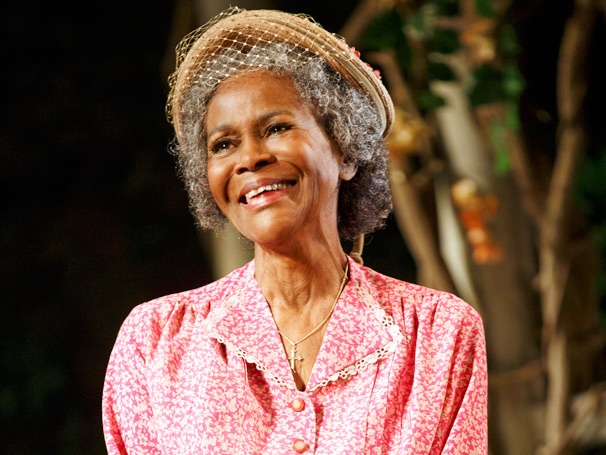
Emmy-winning veteran Cicely Tyson returns to the stage after a three decade absence in Roundabout's acclaimed revival of Horton Foote's The Trip to Bountiful
 
Nominees:  Laurie Metcalf, The Other Place; Amy Morton, Who’s Afraid of Virginia Woolf?; Kristine Nielsen, Vanya and Sonia and Masha and Spike; Holland Taylor, Ann; Cicely Tyson, The Trip to Bountiful

 
There are some truly masterful performances nominated in this category, and it’s difficult to argue against any of these women.  Of the five nominees, I’m sad to say Amy Morton has the smallest chance of winning.  While a fascinating Martha in Who’s Afraid of Virginia Woolf?, Morton ended up playing second fiddle to Tracy Letts’ George.  Critics are used to seeing that power dynamic reversed, and underplaying a role has not been the path to Tony glory in the past.  And Holland Taylor’s nomination has more of an air of respectful acknowledgment than passionate support, which means that when push comes to shove she will not be the first (or second or third) actress people vote for.

Kristine Nielsen is an interesting case, as she has won several awards already for her work in Vanya and Sonia.  But every other awards race has deemed Nielsen a supporting actress, and some voters may feel her role is not substantial enough to merit Best Actress.  Which leaves Laurie Metcalf and Cicely Tyson, both of whom received across the board raves for their performances.  In fact, I would say the raves for Metcalf were slightly more ecstatic, but her show closed several months ago while Tyson’s premiered late in the spring season.  And considering that Tyson has already won the Outer Critics and Drama Desk awards for her performance in The Trip to Bountiful, she becomes the clear frontrunner here.  This race is Tyson’s to lose.

Should Win:  Laurie Metcalf, The Other Place
Will Win:  Cicely Tyson, The Trip to Bountiful


Best Actress in a Musical

 
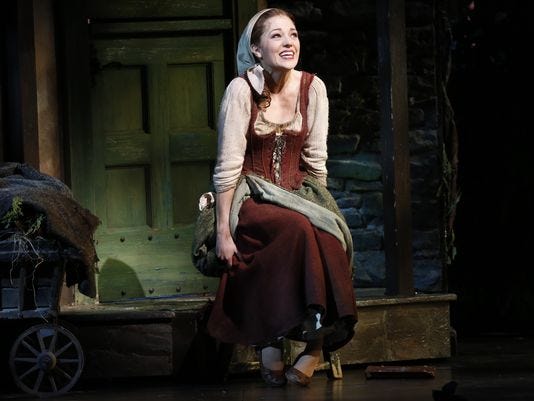
The charming Laura Osnes has lived her own Cinderella story, going from unknown actress on a TV talent show to a Tony-nominated leading lady.

Nominees:  Stephanie J. Block, The Mystery of Edwin Drood; Carolee Carmello, Scandalous; Valisia LeKae, Motown the Musical; Patina Miller, Pippin; Laura Osnes, Cinderella

 
No disrespect to the nominated women, but this year’s Best Actress in a Musical category is one of the weakest in recent memory, lacking the kind of outsized diva performances that usually make this race so interesting.  On the positive side, whoever wins will be a first time Tony recipient, virtually guaranteeing a tearful and heartfelt acceptance speech.  I really enjoyed Stephanie J. Block in Drood, and the part showcased her various talents with panache, but the borderline supporting role sidelined her for much of the second act.  Drood also closed months ago, although it is still more recent than Carolee Carmello’s turn in the short-lived Scandalous.  And while I’m sure Valisia LeKae is lovely as Diana Ross in Motown the Musical, I just don’t think the show or the actress has enough support behind her to snag one of Broadway’s highest honors.

This is a two horse race between past nominees Laura Osnes and Patina Miller, and I would say they are pretty evenly matched.  Miller is giving the more overtly impressive performance as the Leading Player in Pippin, displaying a surprising affinity for the Fosse-esque choreography and utilizing her trademark powerhouse vocals to great effect.  But many people, myself including, feel like Miller is trying too hard, and her aggressive need to impress the audience is not the most endearing quality.  Meanwhile, Osnes is widely liked within the industry, as evidenced by her ability to get nominated among last year’s much more competitive field for her work in the little seen Bonnie and Clyde.  She is also perfectly cast as the title character in Cinderella, a show Tony voters are clearly high on despite the questionable rewrites by Douglas Carter Beane. 

I think in their hearts, most Tony voters want to see Osnes win this award, which would be the ultimate validation for someone who initially rose to fame on a reality TV show.  But Miller’s performance is mighty impressive, and I suspect she would have won two years ago if it had not been for Sutton Foster’s fantastic turn in Anything Goes.  This race is almost too close to call, but my gut is telling me to give Osnes the edge.

Should Win:  Patina Mille, Pippin
Will Win:  Laura Osnes, Cinderella

 
Check back soon to see my predictions for the Best Actor races, followed by the production awards.  In the meantime, catch up with all of my previous Tony coverage here:

 
Best Featured Actress
Best Book and Score
Best Choreography and Direction
Tony Nomination React